

Why Spring Humidity Quietly Ruins a Fresh Paint Job (And How Pros Beat It)
Spring in Plano brings warm afternoons, surprise thunderstorms, and humidity levels that climb fast without warning. Most homeowners schedule painting projects this time of year, expecting smooth results and quick dry times. The truth is, spring humidity can sabotage a fresh paint job in ways you never see coming. Moisture in the air slows curing, traps stickiness in the film, and leaves surfaces vulnerable to peeling within months. Professional painters know how to read the weather, time their coats, and adjust products to match real conditions. This post breaks down what spring humidity actually does to paint, why it matters in North Texas, and how seasoned crews protect your investment.
How Spring Humidity Damages a Fresh Paint Job in North Texas
Humidity is more than a comfort issue; it directly changes how paint behaves on every surface. When moisture saturates the air, water inside the paint cannot evaporate at the normal rate, which delays the entire curing process. That delay creates a window where dust, pollen, and insects stick to the film and become permanent flaws. Spring in Plano is especially tricky because mornings feel dry, but afternoons spike past 70 percent relative humidity. Paint applied under those swings often looks fine on day one, then shows blisters, streaks, or soft spots a week later. Knowing the science behind these failures is the first step toward avoiding them.
How Spring Humidity Damages Paint Adhesion on Exterior Surfaces
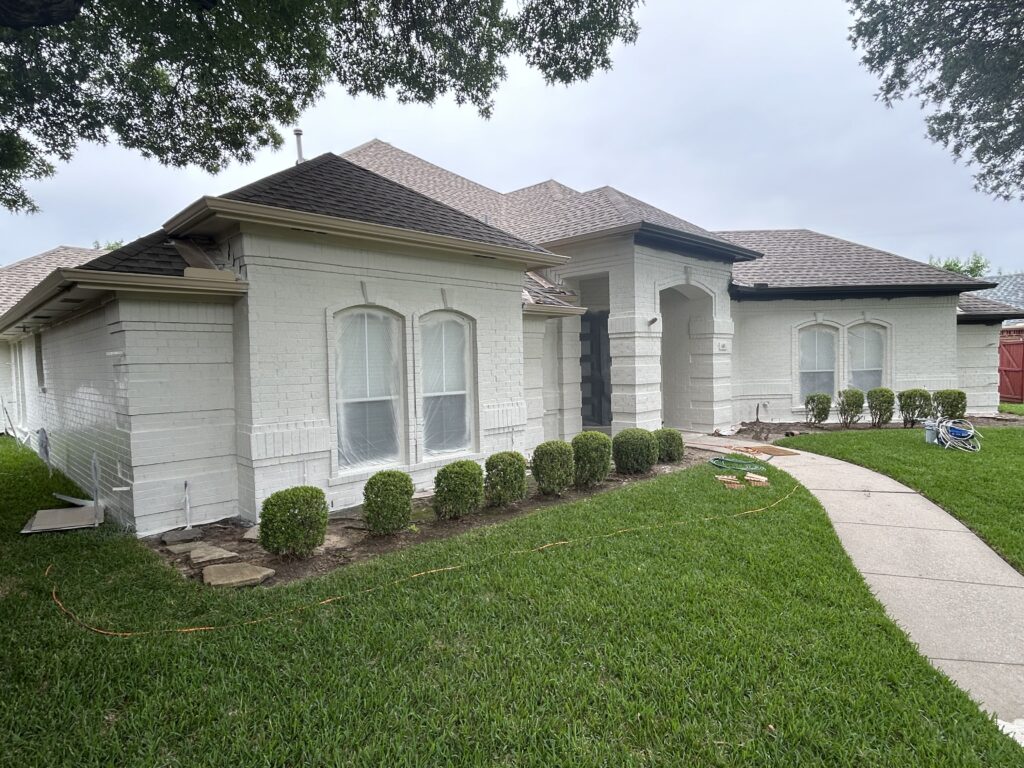
Exterior siding, trim, and fascia take the hardest hit from spring humidity because they sit fully exposed to shifting weather. When moisture penetrates wood or fiber cement before priming, the paint film never bonds correctly to the substrate. That weak bond shows up later as peeling sheets, especially on south-facing walls that get aggressive afternoon sun. Pros use moisture meters to confirm the surface reads under 15 percent before any product touches it. Skipping that step is the single biggest reason exterior jobs fail within the first year. Plano homes built with Hardie board, brick, and cedar each respond differently to trapped moisture, so the testing must happen at multiple points. A reliable crew never assumes the surface is dry just because the sun is out.
Adhesion problems also start with morning dew that lingers longer than most homeowners realize. Even after the visible moisture evaporates, the substrate often holds water below the surface for several hours. Painting too early traps that hidden moisture under a sealed coat, which then pushes outward as temperatures rise. The result is bubbling, soft film, and eventual flaking that no touch-up can fix without full removal. Experienced exterior painting crews wait for surfaces to fully release overnight humidity, usually starting work mid-morning. They also avoid coating surfaces late in the day when dew is about to settle again. Timing is just as important as the product itself.
Wind direction during spring storms adds another layer of risk that homeowners rarely consider. Driving rain from the south or west can force water deep into siding seams, behind trim, and under loose caulking. If a fresh coat seals over that hidden moisture, the paint will lift in patches as the trapped water tries to escape. Pros inspect every seam, joint, and penetration before recoating, especially after a stormy week. They re-caulk failing joints, replace damaged wood, and let everything dry completely before priming. This level of prep is what separates a five-year paint job from a fifteen-year one. Need exterior work done right the first time? Click here for our exterior painting service.
How Spring Humidity Damages Interior Paint Finishes and Dry Times
Interior projects are not safe from humidity just because they happen indoors. Open windows, running HVAC systems, and damp basements all pull moisture into the rooms being painted. Latex paints rely on water evaporation to cure, so high indoor humidity stretches a two-hour recoat window into six or eight hours. Homeowners who recoat on schedule without checking conditions often trap solvent under the second layer, leaving a permanent tackiness. That tackiness collects fingerprints, pet hair, and dust for the life of the finish. A pro will adjust the schedule, run dehumidifiers, or simply wait another day to protect the result.
Sheen consistency is another quiet casualty of high indoor humidity during spring. Eggshell, satin, and semi-gloss finishes all depend on uniform drying to maintain their stated luster across a wall. When one section of a wall dries faster than another, the finished surface shows blotchy patches that catch light differently. This is most visible on long hallway walls, open-concept living rooms, and stairwells with mixed airflow. Skilled interior painters control the environment by closing windows during application, running fans strategically, and monitoring humidity with a hygrometer. They also keep a wet edge while cutting and rolling so the entire wall cures as one continuous film. Small habits like these protect the appearance you actually paid for.
Cabinet refinishing is the project most punished by spring humidity, and it happens in nearly every Plano kitchen renovation. Cabinet doors require multiple thin coats of primer, base, and topcoat, each needing full cure time before the next pass. Humid air slows that cure dramatically and can leave the final lacquer or enamel soft for days. Soft cabinet finishes scratch when handles are reinstalled, dent when dishes are loaded, and yellow faster than properly cured ones. Professional crews refinish cabinets in climate-controlled spaces or use moisture-resistant coatings designed for variable conditions. They also test hardness before reinstalling doors, drawers, and pulls. Want kitchen cabinets that hold up for years? Click here for our cabinet refinishing service.
How Spring Humidity Damages Paint Through Mildew and Surface Contamination
Mildew thrives in the exact conditions that define a North Texas spring: warm temperatures, frequent rain, and shaded exterior walls. When mildew spores land on a damp surface, they take hold within hours and feed on organic material in older paint. Coating over active mildew without killing it first guarantees that the new paint will discolor and fail. Pros wash every exterior surface with a mildewcide solution, rinse thoroughly, and verify the surface is clean before priming. Pressure washing alone does not kill spores, which is a common shortcut that ruins jobs. Proper biological prep is invisible to the homeowner but essential to the result.
Pollen is the other invisible saboteur of spring paint jobs across Plano, Allen, and Richardson. Oak, cedar, and pine trees release massive amounts of pollen during March, April, and May, coating every horizontal surface in fine yellow dust. Painting over fresh pollen embeds it permanently in the wet film, creating a gritty texture that no amount of buffing will smooth out. Quality crews wipe surfaces immediately before application, work on lower-pollen days when possible, and cover finished sections quickly. They also check the local pollen forecast alongside the weather forecast before scheduling exterior work. This kind of planning is invisible to most homeowners but obvious in the finished product.
Standing water and saturated ground around foundations create a constant moisture source that affects nearby surfaces for days. After heavy spring storms, the bottom three feet of exterior siding can stay damp long after the upper sections have dried. Painting that wet zone too soon causes early failure right where homeowners notice it most: at eye level. Experienced painters check the lower walls separately, often waiting an extra day for those areas to fully release moisture. They may also recommend grading or drainage fixes before painting if the issue is recurring. Addressing the root cause protects the paint and the home itself.
How Professional Painters Beat Spring Humidity in Plano and the Surrounding Area
Beating humidity is not about avoiding spring entirely; it is about working smarter within real conditions. Professional crews build their schedules around weather windows, surface readiness, and product chemistry rather than the calendar alone. They invest in tools most homeowners do not own, including moisture meters, hygrometers, and infrared thermometers. They also choose products formulated for variable conditions, which cost more but last significantly longer. The goal is a finish that cures correctly the first time, with no callbacks for peeling, blistering, or discoloration. This professional approach is what makes the difference between a job that lasts five years and one that lasts fifteen.
How Professional Painters Beat Spring Humidity With Smart Scheduling
Smart scheduling starts with reading the seven-day forecast before any contract is signed. Pros look for stretches of three or more consecutive days with stable humidity below 70 percent and no overnight rain. They also watch dew point, which is a more accurate predictor of surface moisture than relative humidity alone. When dew point and air temperature converge, condensation forms on every surface, no matter how clear the sky looks. A skilled crew will reschedule rather than push through a marginal weather window, because the cost of a failed job is far higher than a one-day delay. Homeowners who hire based on price alone rarely get this kind of judgment.
Time of day matters as much as the day itself when spring humidity is in play. Most pros begin exterior work between 9 and 10 in the morning, after dew has burned off but before afternoon humidity climbs. They stop applying topcoats by 3 or 4 in the afternoon to give every surface time to skin over before evening moisture returns. Working in this narrower window means a job takes a few extra days, but the finish cures correctly. Crews that paint from sunrise to sunset in spring often deliver work that fails by the next summer. The clock is a tool, not an obstacle.
Project sequencing is another professional skill that saves jobs from humidity damage. Pros prep, prime, and paint surfaces in an order that takes advantage of sun exposure throughout the day. East-facing walls dry first in the morning, south-facing walls hold heat through midday, and north-facing walls stay cooler and more humid longer. By matching the schedule to the sun, a crew gives every surface the best possible cure conditions. This kind of planning is invisible to homeowners but obvious in the consistency of the finished result. Need painting in nearby communities? Click here for our service area in Allen, TX.
How Professional Painters Beat Spring Humidity With the Right Products
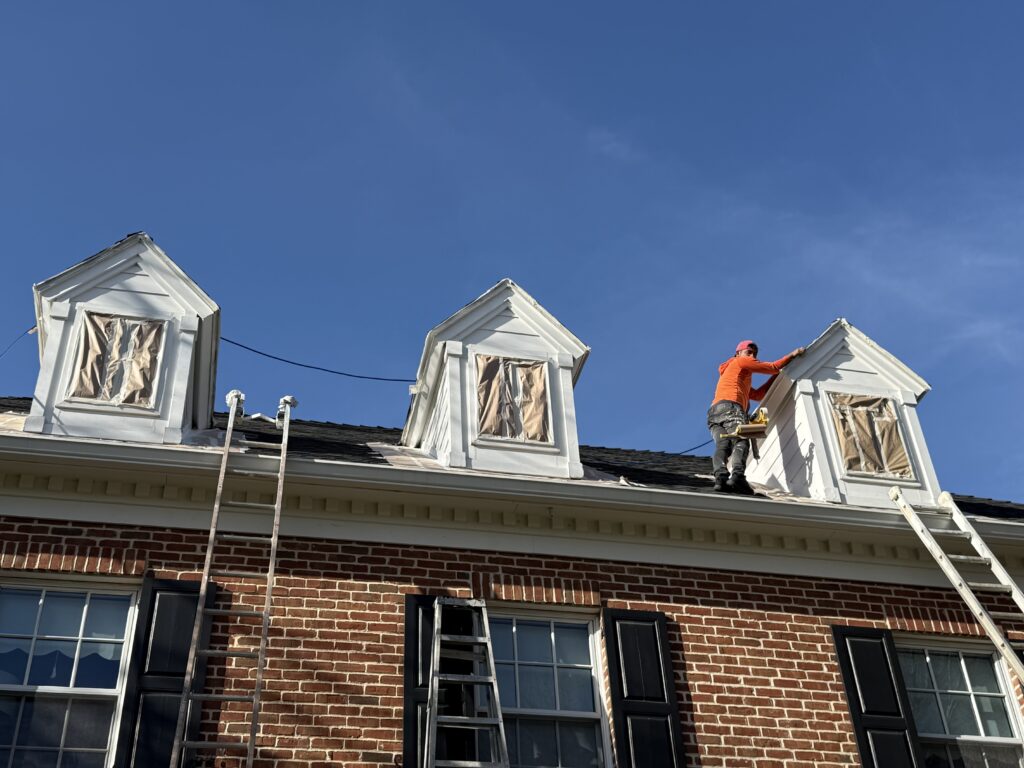
Product selection is where professional knowledge pays off most clearly during humid spring months. Premium acrylic latex paints are formulated with binders that tolerate wider temperature and humidity ranges than budget products. Some manufacturers offer specific lines designed for application down to 35 degrees and up to 85 percent humidity. Pros know which products perform in which conditions and stock them accordingly. Homeowners who buy whatever is on sale at the home center often end up with paint that simply cannot cure in their actual weather. The label matters less than the chemistry behind it.
Primers are even more important than topcoats when humidity is a factor. A good bonding primer creates a dry, uniform surface that locks out residual moisture and gives the topcoat something stable to adhere to. Skipping primer or using a cheap one is a common shortcut that always shows up later as peeling or blotchy color. Pros match the primer to the substrate, the existing finish, and the expected weather during cure. They also let primer cure fully before topcoating, even when the schedule pushes them to move faster. This patience is part of what homeowners are paying for.
Caulk, sealants, and patching compounds all behave differently in humid conditions, and pros know how to compensate. Latex caulk needs longer cure time before painting when humidity is high, sometimes 24 hours instead of the labeled four. Painting over uncured caulk traps moisture, causes shrinkage, and creates visible cracks within months. Quality crews apply caulk early in the project sequence, give it real time to set, and inspect every bead before priming. They also use higher-grade siliconized acrylic products that flex with seasonal movement. Want drywall and surface prep done correctly? Click here for our drywall repair service.
How Professional Painters Beat Spring Humidity Through Detailed Prep Work
Detailed prep work is the backbone of every paint job that survives a North Texas spring. Pros pressure wash, scrape, sand, and spot-prime every problem area before the first finish coat goes on. They replace rotten wood, reset loose nails, and re-caulk every seam that shows movement. This level of prep takes longer than the painting itself, which is why budget operators skip it. The prep work is what determines how long the paint lasts, not the brand on the can. A homeowner who rushes the prep timeline is paying for a job that will fail early.
Surface moisture testing is a non-negotiable step during humid months, and pros do it methodically. They use pin-type moisture meters on wood and pinless meters on masonry, taking readings at multiple heights and orientations. Anything above the manufacturer’s stated maximum for the chosen product means waiting another day. This step is invisible to homeowners but is the single biggest predictor of long-term performance. Crews that skip it are gambling with the homeowner’s investment. Pros document their readings and share them on request, which is a hallmark of an ethical contractor.
Masking, draping, and site protection also become more demanding in spring weather. Wind picks up unexpectedly, dust travels farther, and pollen settles on every surface within minutes. Quality crews use heavier drop cloths, secure plastic with painter’s tape that holds in humid conditions, and replace coverings daily if needed. They also clean up at the end of every shift rather than letting debris accumulate. This kind of site discipline reflects respect for the homeowner’s property and pride in the finished work. It is one of the clearest signs of a professional operation.
Why You Need a Professional Painting Crew During Spring in Plano
Spring is the busiest season for painting in North Texas, which means it is also the easiest season to get burned by an inexperienced crew. The weather is unpredictable, the demand is high, and shortcuts are tempting for operators trying to clear a backlog. Hiring a professional team means paying for judgment, equipment, and prep work that protect your home for years to come. Venture Painting has built its reputation on doing the work right the first time, even when conditions are challenging. We serve Plano, Addison, Allen, Murphy, Parker, Richardson, and Sachse with the same standard on every job. Spring is the season where careful work pays off most.
Why You Need a Professional Painting Crew for Real Weather Judgment
Real weather judgment is something you only get from years of experience on North Texas homes. A pro reads the sky, the dew point, the wind, and the soil conditions before deciding whether to start a coat. That kind of judgment cannot be taught from a manual or learned in a single season. It comes from watching jobs succeed and fail under every possible condition. When you hire a seasoned crew, you are buying that experience as much as the labor itself. The price reflects the knowledge behind the brushes.
A professional crew also knows when to stop, which is harder than knowing when to start. Cloud buildup, a shifting wind, or a rising dew point can all signal that it is time to wrap up for the day. Crews that push through marginal conditions to finish on schedule almost always deliver work that fails early. Pros communicate these decisions clearly, explain the reasoning, and reschedule without drama. This kind of honesty is what builds long-term trust with homeowners. It is also the foundation of a clean reputation in a competitive market.
Beyond daily decisions, real weather judgment shapes the entire project plan from estimate to final walkthrough. Pros build buffer days into the schedule, sequence work around expected weather, and order materials based on actual conditions. They do not promise unrealistic timelines just to win a bid. Homeowners who hire on price alone often find themselves with a half-finished job when the weather turns. A professional crew protects you from that scenario by planning for reality, not optimism.
Why You Need a Professional Painting Crew for Long-Term Value
Long-term value is the real measure of a paint job, and it shows up over five, ten, and fifteen years rather than on day one. A cheap job that looks good for six months but peels by year two costs more than a quality job that lasts a decade. Pros use better materials, do deeper prep, and stand behind their work with meaningful warranties. They also document the products and colors used so future touch-ups match seamlessly. This kind of record-keeping is rare among budget operators and invaluable to homeowners. Long-term thinking is the foundation of professional painting.
Resale value is another reason to invest in quality painting, especially in high-value Plano communities. Buyers and appraisers notice peeling paint, mismatched touch-ups, and uneven finishes immediately. A professionally painted home shows pride of ownership and supports the asking price during negotiations. Pros understand which colors, finishes, and prep standards hold up best in this market. They guide homeowners toward choices that protect both the home and its market position. This guidance is part of the value of hiring a professional.
Maintenance painting also benefits from a long-term professional relationship. A crew that has worked on your home before knows the substrates, the trouble spots, and the products that performed well. Future projects go faster, cost less, and deliver more consistent results. Homeowners who jump from contractor to contractor lose this institutional knowledge every time. Building a relationship with a trusted painter is one of the smartest moves a homeowner can make.
Why You Need Venture Painting for Your Spring Painting Project
Venture Painting is owned and operated by Zeb Van Pelt, a North Texas native who built this company on detailed prep work and honest pricing. Every estimate is free, every quote is clear, and every crew is trained to respect your home like it is their own. We specialize in interior and exterior painting, cabinet refinishing, drywall repair, fence staining, and commercial work. Our team handles the weather judgment, product selection, and prep work that turn a fresh coat into a lasting finish. We do not cut corners during busy spring months, even when the schedule is full.
Our service area covers Plano, Addison, Allen, Murphy, Parker, Richardson, and Sachse, all communities we know well. We understand the local substrates, the neighborhood styles, and the weather patterns that shape every project. This local knowledge means faster timelines, better recommendations, and finishes that hold up in our specific climate. Our crews are clean, organized, and respectful, with a friendly approach that makes the project enjoyable from start to finish. We treat every home like a long-term relationship, not a one-time transaction.
Ready to protect your home with a paint job that survives the spring? Click here to learn more about Venture Painting and request your free estimate. We will walk you through the prep, the products, and the schedule so you know exactly what to expect. Our team is ready to deliver clear pricing, careful work, and a finish that looks great for years. Spring is the right time to invest in your home, and Venture Painting is the right team to do it. Reach out today and see the difference detailed prep and honest service make.