

Why Interior Paint Smells Stronger Once You Close The Windows For The Season
Most homeowners in North Texas notice the same thing every year. A room gets painted in mild weather, the smell fades within a couple of days, and everything seems finished. Then the first real cool front arrives, the windows stay shut, the HVAC system starts cycling on a regular schedule, and that faint paint odor comes back with surprising strength. Nothing went wrong with the paint, and the walls are not defective. What changed is the amount of fresh air moving through the house, along with the temperature of the surfaces themselves. Paint continues releasing small amounts of solvent vapor for weeks after it feels dry to the touch, and a sealed house gives that vapor nowhere to go. Understanding the chemistry behind the odor makes the problem far easier to solve, and it also helps you plan future projects so the smell never becomes an issue in the first place.
What Causes Interior Paint Smell To Get Stronger When Windows Are Closed
Interior paint smell is not a single odor from a single ingredient. Modern water based wall paint contains pigment, resin, water, and a group of additives that keep the product usable in the can and help it form a continuous film on the wall. Several of those additives evaporate slowly on purpose, because a coating that lost every liquid component at once would crack instead of leveling out. Those slow evaporating ingredients are the ones you smell weeks later. When windows stay open, outdoor air dilutes the vapor faster than the film can release it, so your nose never registers much. Close the house up for the season and the same amount of vapor now collects in a much smaller volume of recirculated air. The paint did not get worse; the room simply stopped flushing itself out.
How Interior Paint Smell Builds Up Inside A Sealed Home
Air exchange is the single biggest factor in how strong interior paint smell feels on any given day. A typical modern home in Plano, Richardson, or Allen is built reasonably tight, and natural air exchange may only replace a fraction of the indoor air each hour once the windows and doors are closed. During mild weather, most families leave windows cracked, run whole house fans, or open doors constantly as people come and go, which pushes that exchange rate far higher without anyone thinking about it. Vapor coming off a freshly painted wall gets diluted almost immediately under those conditions. The moment the season changes and the house gets sealed, the dilution stops, and the concentration in the room climbs until it becomes noticeable. The paint film is releasing vapor at roughly the same slow rate it always was, but the room is now holding onto every bit of it. That accumulation is why the odor often feels stronger at night, since bedroom doors close and occupancy pushes concentrations up in a small space.
The layout of your home makes a real difference in how the odor distributes. Vapor from paint is heavier than the air moving through a hallway, so it tends to settle and pool in rooms with poor circulation, closets, and lower level spaces. A painted guest bedroom that stays closed most of the week becomes a small reservoir of concentrated odor, and every time someone opens the door, that air spills into the hallway. Interior doors, blocked return vents, and furniture pushed against supply registers all reduce the mixing that would otherwise thin out the odor. Homeowners frequently assume one wall was painted incorrectly because a single room smells much worse than the rest of the house. In almost every case, that room simply has the least airflow, and the paint on those walls is behaving exactly like the paint everywhere else.
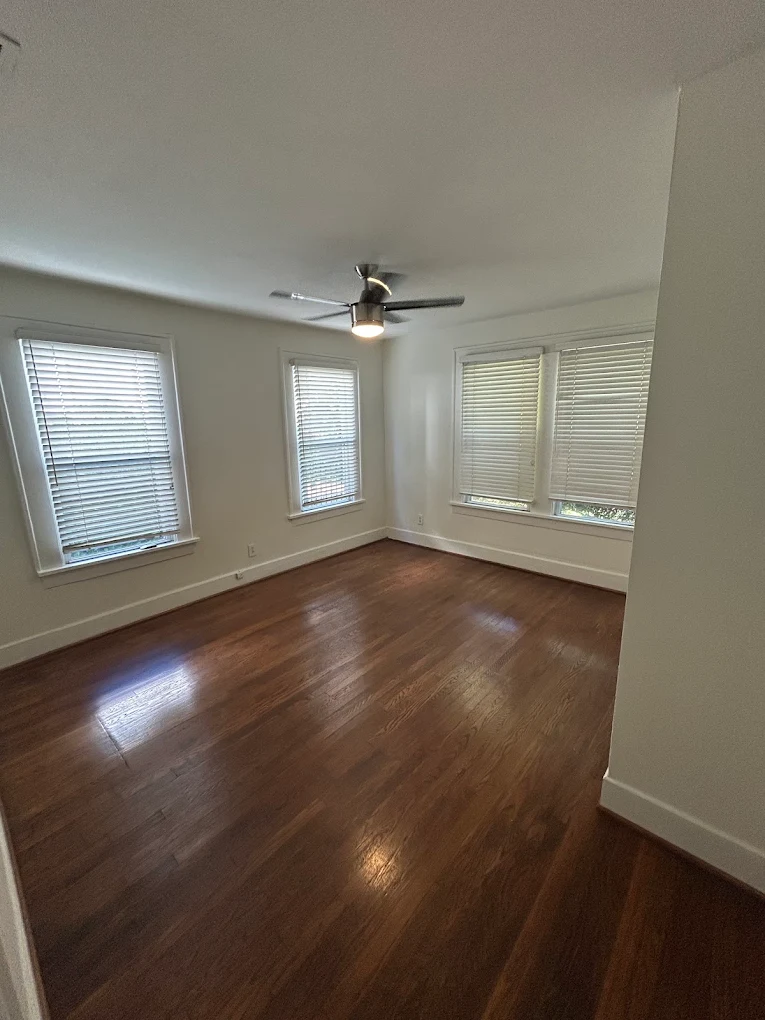
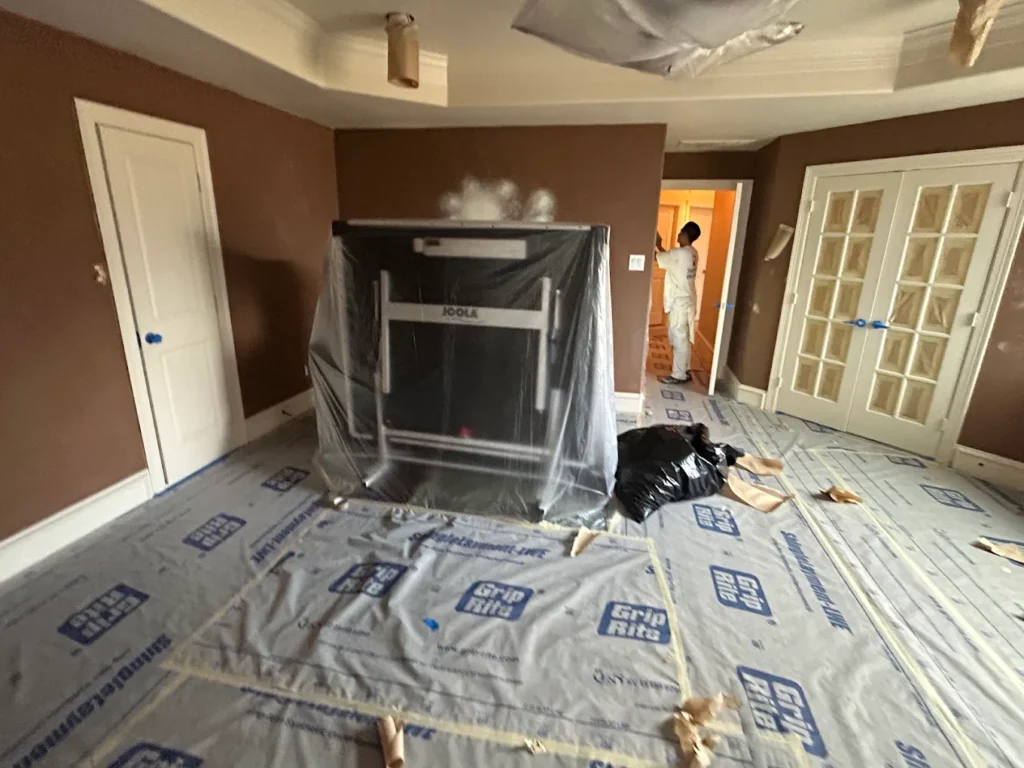
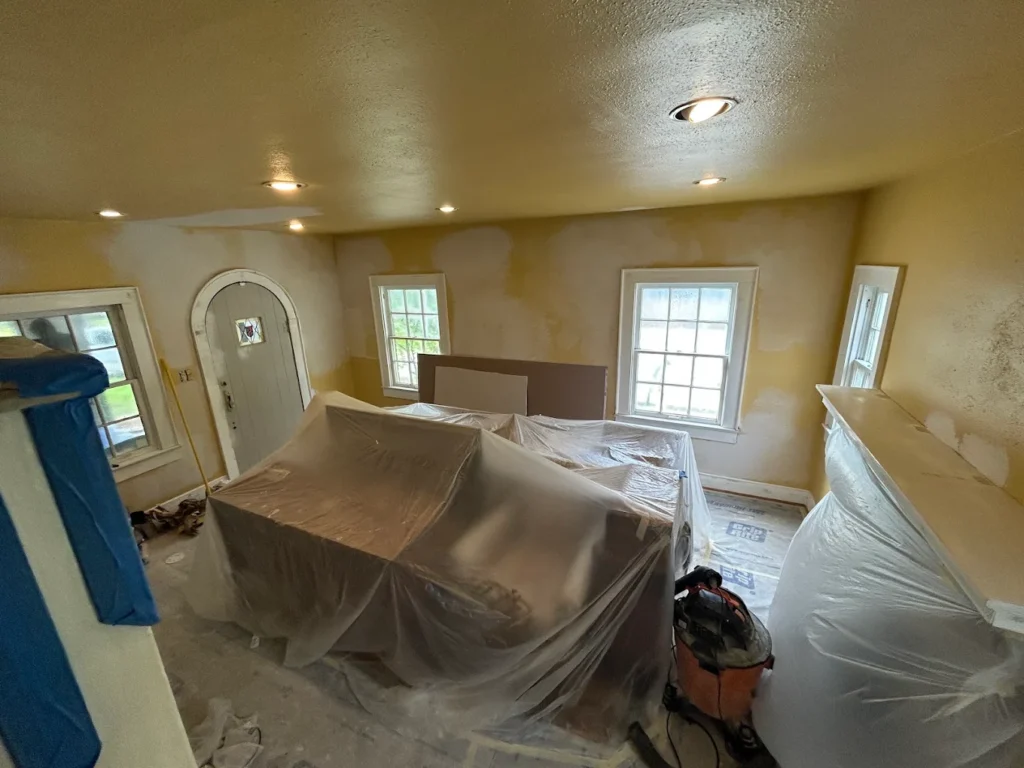
Soft materials inside the home complicate the timeline further. Carpet, curtains, upholstered furniture, mattresses, and even stacks of clothing absorb airborne compounds while paint is curing, and they release those compounds back into the room later. This is a normal exchange between air and porous surfaces, and it explains why some rooms still smell faintly of paint long after the walls have stopped contributing much of anything. Once heating raises the temperature of those materials, the release speeds up and the odor returns for a short period. Rooms that were painted with furniture still inside almost always hold odor longer than rooms that were fully cleared. Professional crews move and cover contents for exactly this reason, since good containment protects your belongings from dust and also limits how much odor they collect. Getting the room emptied before painting costs a little effort up front and saves weeks of lingering smell afterward.
Why Interior Paint Fumes Linger During Curing, Not Just Drying
Drying and curing are two different processes, and confusing them is the most common reason homeowners are caught off guard by returning odor. Drying is the loss of water and fast evaporating solvent, which usually takes one to four hours per coat under normal indoor conditions. Curing is the slower chemical and physical process where the resin particles fully coalesce into a hard, continuous film, and that stage commonly takes two to four weeks for a standard water based interior paint. Throughout the curing window, coalescing agents and other slow release additives keep working their way out of the film and into the air. You can put furniture back and use the room normally during that period, but the paint is still finishing its job at a molecular level. The smell you notice in week three is the tail end of that process, not a sign of a failed application.
The specific product matters a great deal here. Water based acrylic and latex paints release the bulk of their vapor within the first two to three days, then taper off steadily over the following weeks. Oil based alkyd enamels, still used on some trim, doors, and metal surfaces, release much more solvent vapor and hold a sharper smell for a considerably longer stretch. Alkyd products also cure through oxidation, which means the chemical reaction with air continues for weeks and produces its own distinct odor along the way. A homeowner who painted walls with acrylic in one weekend and trim with an oil based enamel the next often blames the walls, when the trim is doing almost all of the smelling. Shellac based and solvent based primers used for stain blocking or odor sealing behave similarly and can dominate a room for several days. Knowing which product went on which surface takes most of the guesswork out of diagnosing the source.
Zero VOC and low VOC labeling helps, though it does not guarantee an odorless room. Those ratings apply to the base paint in the can before tinting, and the colorants added at the store can raise the total VOC content depending on the depth of the color. Deep reds, rich blues, and saturated greens require far more colorant than a soft off white, so a deep accent wall can smell noticeably stronger than the neutral walls around it even when both used the same product line. Ammonia is another contributor, since many water based paints contain small amounts to stabilize the formula, and that sharp note is often what people describe as the strongest part of a fresh paint smell. Low odor products genuinely reduce the intensity and duration of the smell, and they are worth specifying for bedrooms, nurseries, and home offices. They simply do not eliminate the curing period, which continues regardless of the label on the can.
How Temperature And Humidity Make Interior Paint Smell Stronger
Temperature drives evaporation, and heating a home changes the behavior of a paint film in a way most people never anticipate. When the furnace starts running and interior surfaces warm up, the compounds still trapped in the coating gain energy and move out faster. A wall that sat at seventy degrees for weeks and then gets warmed by a nearby supply register will release a burst of odor that feels like the room was painted yesterday. This effect is especially noticeable on walls above baseboard heaters, on ceilings in rooms with rising warm air, and in closets that share a wall with a heated space. The total amount of vapor left in the film has not increased; it is just leaving on a faster schedule. Once that reserve is depleted, the odor drops off for good, which is why the return is usually short lived.
Humidity works in the opposite direction and can stretch the process out considerably. Water based paint needs water to leave the film before the resin can coalesce properly, and high indoor humidity slows that departure. During a damp stretch of fall weather, a coating that would normally be well along in curing can stall, staying softer and continuing to release odor for a longer total period. Bathrooms, laundry rooms, and kitchens face this constantly because of steam and daily moisture loads. Cold surfaces make it worse, since paint applied below the manufacturer’s minimum temperature may never form a proper film and can stay tacky, soft, and smelly for an extended time. Most standard interior products want surface and air temperatures at fifty degrees or higher, and some specialty formulas go lower. Respecting those numbers is a basic part of professional application and directly affects how quickly the smell disappears.
Seasonal habits amplify everything described above. Families spend more time indoors as the weather cools, doors stay shut, bathroom fans run for shorter periods, and the fireplace or furnace pulls the house into a different pressure balance. Cooking odors, candles, and holiday decorations add competing smells that make people more aware of indoor air quality in general. Under these conditions, a small amount of residual paint vapor becomes far more noticeable than it would have been in April. Anyone with asthma, chemical sensitivity, or respiratory concerns tends to feel it first, and infants and pregnant women are commonly advised to limit exposure to fresh paint fumes. None of this means the paint is unsafe once it has cured, but it does explain why the complaint arrives on a predictable seasonal schedule. Planning your interior work with the calendar in mind removes the problem entirely. Ready to get the inside of your home painted before the house gets sealed up? Click here for our interior painting service.
How To Reduce Interior Paint Smell In A Closed Up House
Reducing interior paint smell comes down to three levers: moving air, filtering air, and choosing products that produce less odor in the first place. You do not need to leave every window open for a month, and you certainly do not need to abandon the room. Short, well timed bursts of ventilation combined with steady internal circulation clear a room far more effectively than leaving one window cracked all day. Filtration handles what ventilation cannot reach, particularly in rooms where opening a window is impractical. Product selection is the long term fix, and it costs almost nothing extra when the decision is made before the first gallon is opened. Applied together, these three approaches take a room from noticeably smelly to comfortable within days rather than weeks.
Ventilation Steps That Reduce Interior Paint Smell Without Losing Heat
The most efficient ventilation strategy in cool weather is short and aggressive rather than slow and constant. Open two windows on opposite sides of the painted room, or one window plus a door into the rest of the house, and create a straight path for air to move through. Place a box fan in one window facing outward so it pulls room air out, which forces replacement air in through the other opening and flushes the space in a matter of minutes. Fifteen to twenty minutes of this treatment does more than eight hours of a single cracked window, and it barely affects your heating bill because the structure and furnishings hold their heat far longer than the air does. Repeat the process two or three times a day for the first week and the concentration in the room will drop dramatically. Choose times when outdoor humidity is low, since dry outdoor air also helps the film finish curing.
Exhaust fans already installed in your home are an underused tool. Bathroom fans and kitchen range hoods that vent to the outside remove air continuously, and running them pulls replacement air from the rest of the house toward those rooms. If you painted a bathroom, running the fan for thirty to sixty minutes at a time after each ventilation cycle will keep pulling residual vapor out. For a painted bedroom near a bathroom, leaving both doors open while the fan runs creates a gentle current across the painted space. Keep in mind that recirculating range hoods, which filter and return air to the kitchen, do nothing for odor removal since the air never leaves the building. Checking which type you own takes thirty seconds and determines how useful it will be.
Your HVAC system helps with distribution, though it needs a small adjustment to do it well. Setting the thermostat fan to the ON position rather than AUTO keeps air circulating continuously, which prevents vapor from pooling in a closed room and moves it toward the return where it can pass through a filter. Make sure supply and return vents in the painted room are open and not blocked by furniture, and leave interior doors open so the room can participate in the whole house loop. Ceiling fans on a low setting add useful mixing at the room level and cost very little to run. Do not close off a freshly painted room and expect it to clear on its own, because sealed rooms are exactly where odor concentrates the most. Keep in mind that circulating air spreads a small amount of odor to the rest of the home temporarily, which is normal and resolves as the total load drops. Steady movement always beats stagnation when the goal is clearing a room quickly.
Filtration And Airflow Tricks That Cut Interior Paint Smell Fast
Standard HVAC filters and basic room air purifiers capture particles, not gases, so they do very little for paint odor on their own. The compounds responsible for the smell are molecules in vapor form that pass straight through a pleated filter without slowing down. Activated carbon is the material that actually works, because its porous structure adsorbs those molecules and holds them. A portable air cleaner with a substantial carbon stage, not just a thin carbon coated screen, will make a measurable difference in a painted room. Look for units that state the weight of carbon they contain, since more carbon means more capacity and longer service life. Run the unit continuously in the painted room with the door closed at night, then ventilate during the day for the best combination.
Bulk activated charcoal placed around the room offers a low cost supplement. Charcoal sold for air purification, along with charcoal based odor absorbing products, works through the same adsorption mechanism as a filter cartridge. Set open containers on the floor and on shelves in the painted room, since the effect depends on air contacting the surface of the material. It works slowly and passively, so treat it as support for ventilation rather than a replacement. Many folk remedies circulate online, including bowls of vinegar, sliced onions, and coffee grounds, and most of these simply mask odor with a competing smell instead of removing anything. Baking soda has real value for absorbing certain odors from fabrics and carpets but does very little against airborne solvent vapor. Spend your effort on airflow and carbon, and the results arrive much faster.
Address the absorbent materials directly if the odor is persisting. Wash curtains, bedding, and any washable fabrics that were in the room during painting, since laundering releases compounds those fibers picked up. Vacuum carpet and upholstery thoroughly with a machine that has a good filter, and consider steam cleaning carpet in a room that held odor for an unusually long time. Wipe down hard surfaces including window sills, shelving, and the tops of door casings, because dust that settled during the project can carry a faint smell of its own. Clothing left hanging in a painted closet frequently holds odor longer than anything else in the house and benefits from a wash or an airing outdoors. These steps target the secondary sources that keep a room smelling painted after the walls themselves have gone quiet.
Paint Choices That Prevent Strong Interior Paint Smell Next Time
Product selection is where you get the biggest return for the least effort, and it happens before any work begins. Specify a quality low odor, low VOC acrylic product for walls and ceilings, and pair it with a water based enamel for trim and doors rather than a traditional oil based alkyd. Modern water based enamels have improved enormously and now deliver hard, washable finishes on trim without the heavy solvent smell that used to be unavoidable. Ask for products with strong odor performance in occupied spaces, since manufacturers specifically formulate lines for hospitals, schools, and homes where people stay in the building during the work. Discuss color depth as well, because deep saturated colors require more colorant and generally carry more odor than lighter shades in the same product family. A conversation about product selection during the estimate is the simplest way to control the entire issue.
Primer choice deserves equal attention. Shellac based and oil based stain blocking primers are excellent problem solvers for water stains, smoke damage, tannin bleed from wood, and persistent odors in a substrate, but they produce a strong smell of their own during application and early curing. Using them only where they are genuinely needed, rather than across an entire room by default, keeps the odor load low. Water based bonding and stain blocking primers handle a large share of ordinary residential work perfectly well. When a solvent based primer is truly the right call for a specific area, scheduling that portion first and ventilating aggressively that same day keeps it contained. A crew that understands the difference will spec accordingly instead of reaching for the strongest product every time.
Application quality affects odor duration more than most homeowners expect. Coats applied too heavily take longer to release their solvent content, and a thick film holds vapor deeper inside where it escapes slowly. Proper spread rates, correct recoat timing, and adequate airflow during the work all shorten the curing period. Surfaces that were not cleaned properly can interfere with adhesion and film formation, which extends the time before the coating hardens fully. Cabinets are a special case, since doors and drawer fronts sit in enclosed boxes where vapor has almost nowhere to escape, and a rushed cabinet job can smell for a long time inside those cavities. Leaving doors and drawers open for several days after a cabinet project makes a substantial difference. Thinking about refinishing your kitchen before the house gets closed up? Click here for our cabinet refinishing service.
Why You Need A Professional Interior Painting Team Before The Windows Close For The Season
The difference between a room that smells for four days and a room that smells for four weeks usually comes down to preparation, product knowledge, and scheduling. Professional crews control airflow during the work, apply coatings at correct thicknesses, and select products suited to occupied homes in cool weather. They also handle the surface problems that quietly extend curing times, including moisture issues, contamination, and repairs that need to be done before any paint goes on. Homeowners rarely have the equipment or the product access to manage all of that at once. Getting the work done correctly the first time saves the seasonal frustration entirely.
Why Professional Prep Work Reduces Interior Paint Smell In Cooler Months
Preparation determines how well a coating forms its film, and film formation determines how quickly the odor stops. Walls carrying dust, grease, hand oils, or old cleaning residue prevent proper adhesion, and coatings that do not bond well stay soft longer than they should. A professional crew washes, sands, patches, and primes as needed so the paint has a sound surface to build on. Repairing damaged drywall, failed tape seams, nail pops, and cracked corner bead before painting prevents both the appearance problems and the uneven drying that comes from patching material applied at the wrong time. That level of prep is the same work that produces a durable finish, so the odor benefit comes along with better results overall.
Moisture is the hidden factor behind many slow curing rooms. Walls that have absorbed moisture from a plumbing issue, a roof leak, or high humidity will hold paint in a soft state far longer than dry walls, and the smell stretches out accordingly. Professionals check for these conditions before starting rather than discovering them halfway through. Correcting the source and allowing the substrate to dry properly is not optional work; it is the difference between a lasting finish and a callback. Skipping that step to save a day almost always costs more time later.
Containment and airflow management during the project matter just as much as what happens afterward. Crews that set up controlled ventilation, protect adjacent rooms, and keep air moving through the work zone remove the bulk of the vapor while the work is happening instead of leaving it for you. Contents get moved out or covered so fabrics and furniture never absorb the odor in the first place. Cleanup includes removing dust and debris that would otherwise hold a smell of their own. Need drywall damage repaired before the painting starts? Click here for our drywall repair service.
Why Scheduling Interior Painting Early Keeps Paint Odor Under Control
Timing your interior painting project gives you free ventilation that no amount of equipment can replace. Painting while outdoor temperatures still allow open windows means the room flushes itself throughout the day at no cost and with no effort. The heaviest release of vapor happens in the first seventy two hours, so capturing that window with real airflow removes most of the total odor before the house ever gets sealed. Projects finished several weeks ahead of consistent cold weather are typically well into curing by the time the furnace starts running regularly. That single scheduling decision prevents the seasonal odor return that brings most homeowners to this question in the first place.
Early scheduling also protects the quality of the work itself. Surface and air temperatures need to stay within the manufacturer’s range during application and for a period afterward, and cold snaps can push a room outside that range without much warning. Interior work is more forgiving than exterior work in this respect, though unheated spaces such as garages, sunrooms, and bonus rooms over garages can drop well below acceptable temperatures. Getting those spaces done while conditions are favorable avoids compromises. A contractor who plans around the calendar delivers a better finish than one who works around the weather.
Holiday timing is a practical consideration that catches many families by surprise. Rooms painted a week before guests arrive will still be curing when the house fills with people and the doors stay closed. Booking earlier in the season leaves room for the curing period and for any touch up work that comes out of the final walk through. Contractor schedules also fill quickly as the weather cools and homeowners shift their attention indoors. Reaching out well ahead of the date you want the work finished gives you the most control over both timing and results.
Why Choose Venture Painting For Low Odor Interior Painting In Plano And The Surrounding Area
Venture Painting focuses on detailed prep work because it produces long lasting results and a faster, cleaner curing process. Our crews arrive organized, protect your home properly, and treat your space with respect from the first day to the final walk through. We select products with occupied homes in mind and explain those choices during the estimate so you know exactly what is going on your walls. Free estimates come with clear, honest pricing and no pressure to decide on the spot. Our team handles interior and exterior painting throughout Plano and the surrounding communities, and we bring the same standards to every project regardless of size.
Homeowners across Plano, Richardson, Allen, Murphy, Sachse, Parker, Addison, and Dallas call us for interior painting, cabinet refinishing, drywall repair, exterior painting, fence staining, and commercial work. We are happy to walk through your rooms, identify anything that needs repair before painting begins, and build a schedule that works around your family and the season. Questions about product selection, color choices, or timing are always welcome before you commit to anything. Our goal is a finish you are still happy with years from now.
If a recently painted room in your home is smelling stronger now that the windows are staying shut, we can talk through the cause and help you plan the next project so it does not happen again. Reach us at (214) 233-6044 or by email at zeb@venturepaintingdfw.com to schedule your free estimate. We serve Plano and the nearby high value communities across the Dallas area with a friendly, professional team you can trust.