

Fence Staining Before the Heat Hits: A Texas Homeowner’s Window Is Closing
Spring in Plano gives homeowners a short window to stain a wood fence before summer temperatures climb past comfortable working ranges. Once highs push into the upper 90s, stain dries too quickly on the surface, traps moisture underneath, and leaves blotchy results that fade within a season. The mild May weather across Collin County offers ideal conditions for proper absorption, even drying, and a finish that lasts. Waiting until June or July often means starting over within a year. A fresh coat applied now protects the wood from the brutal Texas sun, monsoon rains, and the freeze-thaw cycles that return each winter. Smart homeowners across Plano, Allen, and Richardson are booking their fence staining projects this month to lock in lasting protection.
Why Fence Staining in Spring Beats Fence Staining in Summer Heat
Texas summers punish exterior wood finishes in ways most homeowners do not expect. Stain applied during high heat cures unevenly, with the top layer hardening before the lower layers can bond to the wood grain. The result is a fence that looks freshly stained for a few months, then peels, fades, or develops streaks once the first heavy rain arrives. Spring temperatures in the 60s and 70s allow the stain to soak deeply into cedar, pine, and redwood boards. Booking your fence staining project before June protects your investment and saves you from repainting next year.
Spring Fence Staining Delivers the Deep Penetration Texas Wood Needs
Wood absorbs stain best when temperatures sit between 50 and 80 degrees, and Plano typically holds that range from late March through mid-May. Cedar and pine fences expand and contract with humidity changes, so the stain needs time to settle into every grain pattern. A morning application in spring gives the product six to eight hours of slow, even drying before evening cools things off. That extended absorption window is what creates a finish bonded to the wood rather than sitting on top of it. Summer applications dry in two to three hours, which sounds efficient but actually traps surface moisture and weakens the seal. Stains applied in spring routinely last three to four years, while summer-applied finishes often fail within twelve to eighteen months. The math favors patience and proper timing.
Wood that has weathered through a Texas winter is also drier and more receptive to stain in early spring. Cold months pull moisture out of fence boards through repeated freeze-thaw exposure, leaving the grain open and thirsty by April. That natural condition gives stain a clean pathway into the wood without requiring aggressive sanding or chemical strippers. Once humidity climbs in late May, the wood begins reabsorbing moisture from the air, which fights against any stain you try to apply. Catching that dry window matters more than most homeowners realize. Professional crews plan their schedules around it because the difference shows up clearly two years later. A spring stain job simply outperforms a summer one.
Color selection also benefits from spring application conditions. Stains develop their true tone as they cure, and slow curing produces richer, more accurate color than rushed summer drying. Semi-transparent finishes show off the natural grain beautifully when applied in mild weather. Solid stains lay down evenly without lap marks or roller streaks. Homeowners who want a specific shade pulled from a sample card get the closest match when temperatures cooperate. Need fence staining services? Click here for our fence staining service. Spring is the right time to lock in the look you want.
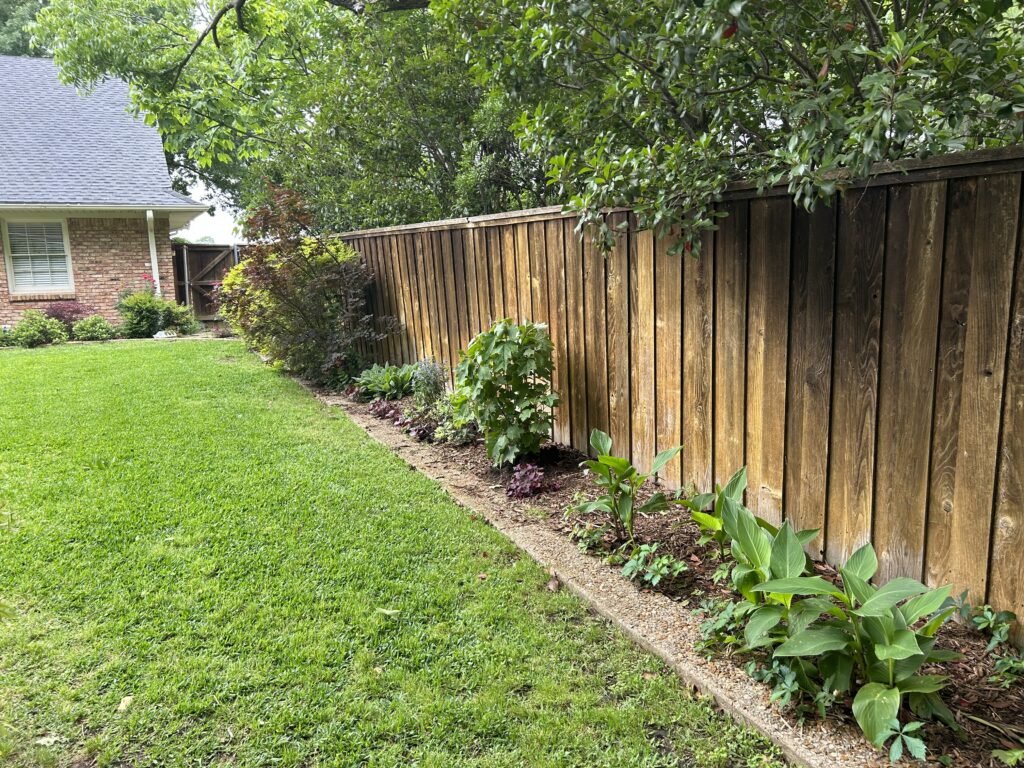
Fence Staining in Hot Texas Summers Causes Common Failures
Lap marks become almost impossible to avoid when stain dries before the next stroke can blend into it. Crews working in 95-degree heat see the leading edge of their stain skin over within minutes, which forces visible overlap lines down every board. Those marks do not buff out or fade with time. They become permanent reminders of a job done in the wrong season. Texas homeowners often blame the contractor when the real culprit is the calendar. Heat rushes the process and removes the working time needed for clean results.
Surface flashing is another summer-specific problem that ruins fence finishes. When stain hits hot wood, the solvents evaporate so quickly that pigment never has time to settle evenly. The result is a patchy appearance with darker and lighter zones across the same board. This is especially common on south-facing and west-facing fences that absorb direct afternoon sun. Even professional applicators struggle to produce consistent color in those conditions. Spring application eliminates the issue entirely because the wood stays cool enough to accept pigment uniformly. Cooler boards mean smoother color and longer-lasting protection.
Mildew and mold growth often follow summer stain applications because trapped moisture has nowhere to escape. Hot, humid Texas afternoons drive water vapor into the wood, and a fast-drying stain seals it in. Within weeks, dark spots appear on the surface, and the homeowner assumes the stain was defective. The real problem was timing. Spring conditions allow moisture to escape naturally before the stain forms its protective barrier. That single difference prevents most premature failures across North Texas fence projects. Booking now means avoiding that headache later.
How to Prepare Your Fence for Staining Before Texas Summer Arrives
Preparation determines whether a stain job lasts five years or five months. Even the best product applied to a dirty, damaged, or moist fence will fail quickly. Spring gives homeowners enough lead time to handle prep work properly without rushing. A weekend of cleaning, repairs, and inspection sets the stage for a stain application that actually performs. Skipping prep is the single most common mistake on do-it-yourself fence projects. Professional crews handle every step systematically because they know what each one prevents.
Cleaning Your Fence Before Staining Removes Years of Hidden Damage
Pressure washing pulls dirt, mildew, pollen, and old stain residue out of the wood grain. Plano fences accumulate a surprising amount of buildup from oak pollen in spring, dust storms in late summer, and lawn chemical overspray throughout the year. None of that contamination is visible from a few feet away, but it absolutely blocks stain absorption. A proper cleaning uses 1500 to 2000 PSI with a wide fan tip held twelve inches from the surface. Higher pressure damages the wood fibers and creates fuzzy texture that grabs dirt later. The goal is clean wood, not eroded wood.
After pressure washing, the fence needs at least 48 hours to dry completely before any stain touches it. Moisture meters should read below 15 percent across the boards, which is the threshold most stain manufacturers specify. Skipping the drying time is the fastest way to ruin an otherwise good prep job. Trapped moisture causes peeling within months, and no warranty covers that mistake. Spring weather typically delivers the dry, sunny days needed for proper drying without the extreme heat that introduces other problems. Patience here pays off for years. Professional crews carry meters and check moisture at multiple points before opening the first can of stain.
A wood brightener or cleaner often follows the pressure wash to neutralize tannins and restore the natural color. Cedar especially can turn gray or develop dark streaks from iron content in groundwater used for irrigation. A two-step cleaner-and-brightener treatment brings back the warm tone that makes stain look its best. The process takes about thirty minutes per section and costs very little compared to the improvement in final appearance. Homeowners who skip this step often wonder why their stain looks dull or muddy after curing. The answer was in the prep. Need a professional crew to handle it correctly? Click here to schedule fence staining service before summer takes over.
Repairing Fence Damage Before Staining Saves Money Long-Term
Loose boards, popped nails, and split pickets need attention before any stain goes on. Driving in a fresh nail through a freshly stained board leaves a permanent mark that cannot be hidden. Replacing a rotted picket after staining means the new board stays raw while everything around it has color. Spring inspections catch these issues early enough to repair them properly. A walk along both sides of the fence with a hammer and a handful of replacement boards solves most problems in an afternoon. The fence then accepts stain as one continuous surface.
Posts deserve special attention because they bear the structural load and contact the soil directly. Rotted posts will keep rotting under a fresh coat of stain, and within a year the fence starts leaning. A simple test with a screwdriver tells you everything; if the tip pushes in easily near the base, that post needs help. Some can be saved with a steel post-stiffener driven alongside, while others require full replacement. Spring weather makes digging and concrete work much easier than summer or winter. Handling post repairs before staining means you stain a fence that will actually stand up straight for the next decade.
Gates often need adjustment after a winter of expansion and contraction. Hinges loosen, latches misalign, and gaps appear that did not exist last fall. A quick tune-up before staining lets the gate accept color uniformly across all its surfaces. Painting around a sagging gate looks worse than leaving it unstained altogether. Professional crews check every gate as part of their prep walk-through and address issues on the spot. That attention separates a quick stain job from a complete fence renewal. The result looks like a brand new fence even though the wood underneath is years old.
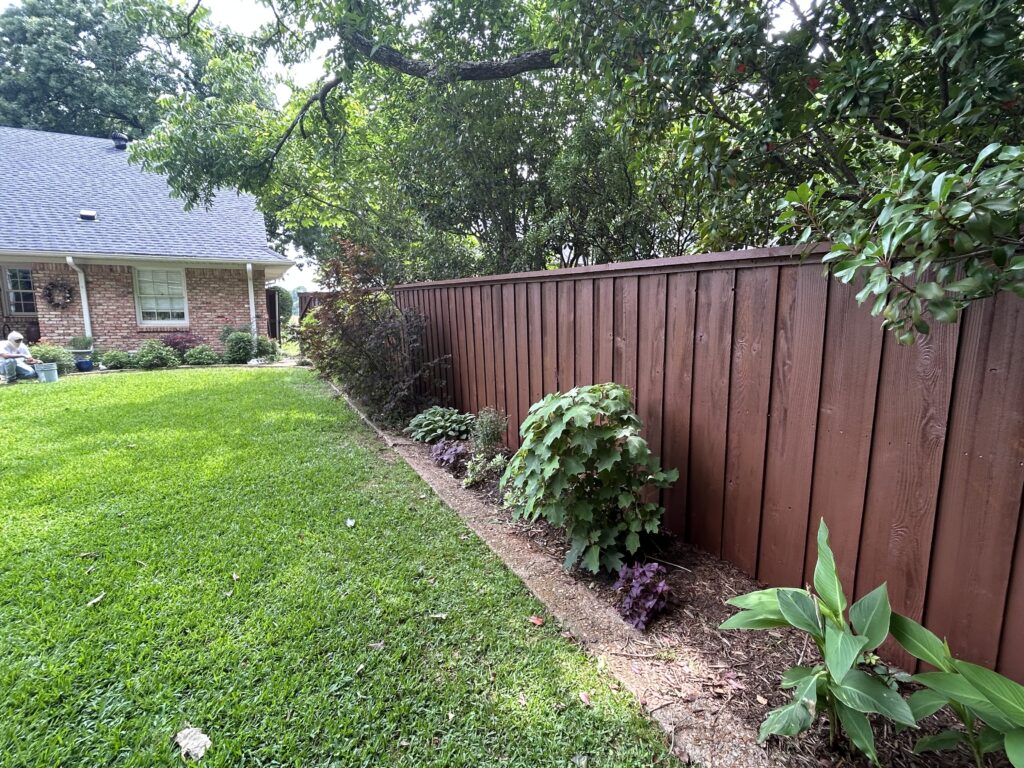
Why You Need Professional Fence Staining Before Summer Heat Arrives
Spring is the smartest time to invest in fence staining across Plano and the surrounding Collin County communities. The weather window is short, prep work takes time, and a botched summer application costs more to fix than to do right the first time. Homeowners who book now get on the schedule before the rush hits in May. A professional crew brings the equipment, the experience, and the proper materials to deliver a finish that lasts. Spring projects also coincide with peak home value season, which matters for anyone considering a sale this year.
Professional Fence Staining Protects Your Investment for Years
A wood fence in North Texas costs between $3,000 and $10,000 to install depending on size and material. That investment deserves the same care any other home asset receives. Stain acts as sunscreen and waterproofing in one product, blocking the UV rays that gray cedar and the rain that warps pine. Without protection, even premium fence materials degrade noticeably within two to three years. With proper staining on a regular schedule, the same fence stays attractive for fifteen to twenty years. The math favors maintenance every time.
Curb appeal is another reason fence staining matters more than homeowners often realize. A stained fence frames the yard and signals that the property is well-cared for from the street. Real estate agents in Plano and Allen consistently note that fence condition affects buyer impressions before they even reach the front door. A weathered, gray fence drags down the perceived value of an otherwise beautiful home. Fresh stain solves that problem in a single weekend. The return on a $1,500 stain job often shows up as thousands of dollars in stronger offers.
Privacy and security functions of a fence also depend on its physical integrity. Stain prevents the cracking and splitting that creates gaps and weak spots. A well-maintained fence keeps pets contained and unwanted visitors out. Letting it deteriorate eventually leads to expensive board replacements or full rebuilds. Spring staining catches the wood before it reaches that point. Need help protecting your fence investment? Click here to learn more about our fence staining service.
Choosing the Right Fence Staining Schedule for North Texas Weather
Most North Texas fences need restaining every three to four years, though the exact timing depends on sun exposure, fence age, and product quality. South-facing and west-facing sections take more abuse and may need attention sooner. Shaded sections under tree cover often last longer between treatments. A simple water test tells you when the time has come; if water beads on the surface, the stain is still working, while soaking in means the fence is ready for a fresh coat. Checking annually each spring builds the habit. That routine prevents the major restoration projects that cost ten times more than regular maintenance.
The product itself matters as much as the application schedule. Oil-based stains penetrate deeper and last longer in Texas climates than water-based alternatives. Semi-transparent finishes show off wood grain while still blocking UV damage. Solid stains hide imperfections and provide maximum protection but cover the natural look entirely. Each option has its place depending on the fence age, condition, and homeowner preference. A professional consultation helps match the product to the situation. Picking the wrong product wastes money and disappoints expectations.
Application technique also affects how long the finish holds up. Brushing works stain into the grain better than spraying, though spraying covers large areas faster. Most professional crews combine both methods, spraying first and back-brushing immediately to push the stain into the wood. That two-step approach delivers the best of both worlds; speed and thorough penetration. Homeowners attempting the job alone often skip the back-brush and end up with surface coating that fails early. Hiring a crew that understands proper technique pays for itself in years of added durability.
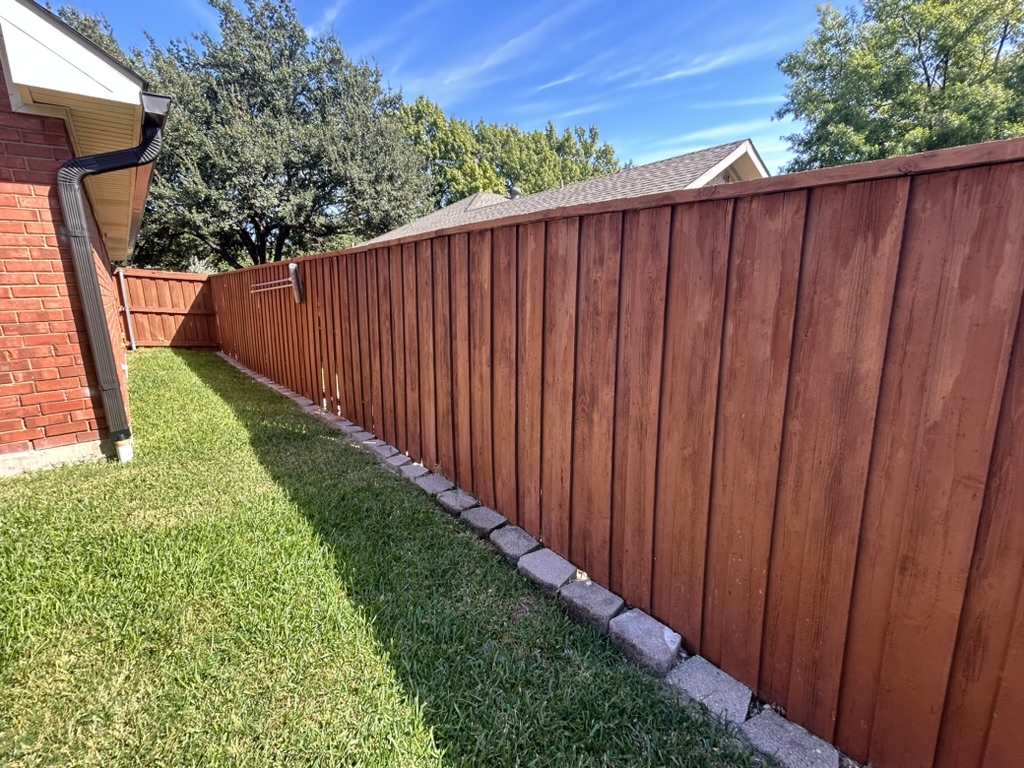
Why Choose Venture Painting for Your Fence Staining Project
Venture Painting brings detailed prep work to every fence staining project across Plano, Allen, Richardson, and the surrounding communities. Owner Zeb Van Pelt built the company on the belief that lasting results come from proper preparation, not just quality stain. Every project starts with a thorough inspection, professional cleaning, and any repairs needed before the first drop of stain hits the wood. Free estimates come with clear, honest pricing so homeowners know exactly what to expect. No surprises, no upsells, just straight talk and quality work.
The crews at Venture Painting show up clean, organized, and respectful of your property. Drop cloths protect landscaping, equipment stays tidy, and the worksite gets cleaned up at the end of every day. Customers across Plano, Allen, and Richardson consistently mention the professionalism of the team in their reviews. That reputation took years to build and gets protected on every job. A fence staining project should improve your home, not disrupt your week.
Spring is the right time to book, and Venture Painting still has openings before the heat hits. A friendly, professional team arrives on schedule, communicates clearly throughout the project, and delivers results that hold up for years. Interior and exterior painting specialists, including dedicated fence staining crews, serve Plano and the surrounding high-value communities every day. Reach out today for a free estimate and lock in a finish that will look great long after summer fades. Visit venturepaintingdfw.com to schedule your free estimate and beat the heat with a properly stained fence.