

The Truth About Painting Stucco in Triple Digit Heat
Painting stucco in triple digit heat is one of the most common mistakes Plano homeowners make during the peak of a Texas summer. Stucco surfaces absorb sunlight and can reach temperatures well above 140 degrees on a hot afternoon, which causes paint to flash dry before it can properly bond. The result is poor adhesion, blistering, and a finish that fails years before it should. Most paint manufacturers list a maximum application temperature between 90 and 95 degrees, and that rule applies to the surface itself, not just the air. Texas summers regularly push past those limits from late May through September. Understanding how heat affects stucco paint helps you protect your investment and avoid costly redo work. The good news is that proper timing, the right products, and an experienced crew can deliver a long lasting finish even during the hottest months.
Why Painting Stucco in Triple Digit Heat Causes Problems
Stucco is a porous, mineral based surface that behaves very differently from wood siding or smooth fiber cement. Its rough texture and dense composition trap heat throughout the day and release it slowly into the evening. When you apply paint to a stucco wall sitting at 130 or 140 degrees, the solvents in the coating evaporate almost instantly. That rapid evaporation prevents the binders from forming a strong film, and you end up with a coating that looks fine on day one but fails within a season or two. Knowing the science behind heat related paint failure is the first step toward avoiding it.
How Triple Digit Heat Damages Stucco Paint Adhesion
Paint needs time to flow, level, and bond to the substrate beneath it. On a stucco wall in triple digit heat, that window can shrink to just a few minutes. The water or solvent carrier flashes off so quickly that the resin never has the chance to penetrate the porous surface. Adhesion suffers, and you often see lap marks, roller stipple, or uneven sheen across the wall. Over time, those weak spots lift, peel, or chalk under the strong North Texas sun. By the second or third summer, the coating may already need touch ups in highly visible areas.
Heat also affects the stucco itself, not just the paint sitting on top of it. Sunbaked stucco expands during the day and contracts at night, and that constant movement stresses any coating applied during peak temperatures. A coating applied in cooler conditions has time to cure into a flexible film that moves with the wall. A coating applied in extreme heat cures into a brittle layer that cracks along stress lines. Hairline cracks then allow moisture to seep behind the paint, which leads to bigger failures down the road. This is why timing matters as much as product selection.
There is also the issue of surface contamination during hot, dusty months. Plano summers bring wind, pollen, and fine grit that settle on warm stucco within hours of cleaning. If a crew pressure washes a wall in the morning and paints in the afternoon, that wall has likely already collected a thin layer of dust. Paint applied over a dusty surface bonds to the dust, not the stucco. As the dust eventually releases, the paint goes with it. Proper prep work and cool surface temperatures are both required for true long term adhesion.
What Triple Digit Heat Does to Stucco Paint Color and Finish
Color hold is another casualty of painting stucco in extreme heat. Pigments need a fully formed binder to lock them in place, and rushed curing weakens that bond. Darker colors fade noticeably within a year or two, and even neutral tones can shift toward a chalky, washed out appearance. Homeowners who invested in a custom color often feel disappointed when the finish looks nothing like the sample within a single season. Proper application during cooler conditions protects the integrity of the color you chose.
Sheen consistency also takes a hit when paint dries too fast on hot stucco. Some areas end up flat while others look glossy, depending on how quickly each section flashed. The wall reads as patchy from across the street, especially under direct sunlight. Textured stucco hides minor inconsistencies, but heat related sheen problems are usually severe enough to show through. Once the finish cures unevenly, the only fix is to repaint the entire wall under better conditions.
Heat blistering is the most dramatic failure homeowners notice. Tiny bubbles form when trapped moisture or solvent tries to escape through a coating that has already skinned over on top. Those bubbles eventually pop, leaving small craters across the stucco. From a distance the wall looks pockmarked, and there is no easy way to repair it without sanding, spot priming, and recoating. Avoiding blistering is one of the top reasons professional painters refuse to work stucco during the hottest part of the day.
Why Triple Digit Heat Voids Many Stucco Paint Warranties
Most premium exterior paint warranties include specific application temperature requirements. Sherwin Williams, Benjamin Moore, and PPG all publish maximum surface temperature guidelines, usually capped at 90 to 100 degrees. Painting outside those limits voids the manufacturer warranty, even if the homeowner did not know the rule existed. When the coating fails three years later, the manufacturer points to the application conditions and denies the claim. The homeowner is then left paying for a second paint job out of pocket.
Contractor warranties often mirror the manufacturer language, which means a hot weather application can leave you with no coverage at all. Reputable painting companies in Plano will refuse to apply coatings outside the recommended temperature window, even when a customer pushes for a fast turnaround. That refusal protects both the homeowner and the contractor from a guaranteed callback. A short delay for cooler weather is far cheaper than a complete repaint two summers later. Honest pricing includes honest scheduling.
Insurance considerations also come into play with hot weather paint failures. If a coating fails and water gets behind the stucco, the resulting damage may not be covered because it stems from improper maintenance. Adjusters look closely at when the work was done and what the conditions were at the time. Documentation from a professional crew, including temperature readings and product data sheets, can make a real difference if a claim is ever filed. Need exterior painting done the right way? Click here for our exterior painting service.
How to Successfully Paint Stucco During Triple Digit Heat
Painting stucco during a Texas summer is not impossible; it just requires planning, patience, and the right approach. Professional crews adjust their schedules, products, and techniques to work around the heat rather than fight it. Surface temperature monitoring, shade tracking, and proper product selection all play a role. Homeowners who understand these methods can make better decisions about when and how to schedule exterior work. The goal is always a finish that holds up for ten years or more, not just one that looks good the day the crew leaves.
The Best Time of Day for Painting Stucco in Triple Digit Heat
Early morning is almost always the best window for hot weather stucco work. Surface temperatures are at their lowest just after sunrise, often 20 to 30 degrees cooler than they will be by noon. Crews can apply paint to a wall sitting at 75 or 80 degrees and give the coating real time to bond before the heat builds. Most professional teams aim to start by 6:30 or 7:00 a.m. and stop work on sun exposed walls by mid morning. That schedule sounds extreme, but it is the difference between a finish that lasts and one that fails.
Following the shade is another proven strategy for hot weather painting. Crews work the east side of the home in the afternoon once the sun has moved west, and they hit the west side first thing in the morning. North walls stay workable for most of the day, while south facing walls require the tightest timing. A skilled foreman maps out the home before the project starts and sequences each elevation around the sun. This kind of planning is invisible to the homeowner, but it directly affects how long the paint job will last.
Evening work is sometimes possible, though it comes with its own challenges. Surface temperatures drop after sunset, but humidity often rises and dew can form on stucco within a couple of hours. Paint applied too late in the day may not cure properly before moisture settles on the wall. Most professional crews prefer mornings over evenings for that reason. The cooler the surface and the longer the dry window, the better the result.
Choosing the Right Products for Painting Stucco in Triple Digit Heat
Not all exterior paints are formulated for hot climates. Premium acrylic latex coatings designed for masonry and stucco offer the best performance in North Texas summers. These products contain extenders that slow the dry time slightly, giving the paint a chance to flow and bond even on warm surfaces. Elastomeric coatings are another strong option for stucco because they bridge hairline cracks and tolerate movement. The right product, paired with the right conditions, dramatically improves the lifespan of the finish.
Primer selection matters just as much as topcoat selection. A masonry primer seals the porous stucco surface and creates a uniform base for the color coat. Skipping primer on bare or weathered stucco is one of the fastest ways to guarantee early failure. On previously painted stucco that is still in good shape, a bonding primer may be all that is needed. A professional painter will assess the condition of the substrate and recommend the appropriate system rather than applying the same approach to every job.
Hot weather additives are sometimes used to extend open time during summer applications. These additives are mixed into the paint at the job site and slow the evaporation rate just enough to improve flow and leveling. They must be used carefully because too much additive affects sheen and durability. An experienced crew knows the right ratio for the product and the conditions. Need help choosing the right exterior coating system? Click here to learn more about Venture Painting.
Preparation Steps for Painting Stucco in Triple Digit Heat
Pressure washing is the first step on almost every stucco project, and timing matters in the summer. Walls washed in the late afternoon may not fully dry before the next morning, especially in humid conditions. Most crews wash early in the day so the stucco has a full evening to dry before paint goes on. Trapped moisture inside stucco is a leading cause of blistering, and rushing this step creates problems that show up months later. A moisture meter reading is the only reliable way to confirm a wall is ready.
Crack repair and patching are critical on older stucco homes. Hairline cracks, larger structural cracks, and damaged areas all need attention before any coating goes down. Elastomeric patching compounds work well for small cracks, while larger repairs may require a stucco patch and a textured finish to match the surrounding wall. Skipping repairs leads to coating failure right at the crack lines, where movement is greatest. A thorough prep stage takes longer but pays off for years.
Caulking around windows, doors, and trim transitions seals out water and pests. Hot weather makes some caulks set up too quickly, so professional crews use products rated for high temperature application. They also tape off and protect landscaping, walkways, and fixtures before any coating begins. Detailed prep work is what separates a paint job that lasts ten years from one that needs touch ups every summer. Need quality drywall and surface prep before painting? Click here for our drywall repair service.
Why You Need a Professional Painter for Stucco in Triple Digit Heat
Tackling stucco painting in the middle of a Texas summer is not a project for guesswork. The combination of extreme surface temperatures, product limitations, and tight timing windows demands experience and the right equipment. A professional crew brings the tools, the schedule, and the trade knowledge needed to deliver a finish that holds up to North Texas weather. Homeowners save money in the long run by avoiding premature failures and warranty issues. The right painter makes summer stucco work both possible and worthwhile.
The Equipment Advantage for Painting Stucco in Triple Digit Heat
Professional crews use infrared thermometers to measure actual surface temperature before applying any coating. Air temperature alone tells only part of the story; a wall reading 135 degrees in direct sun is a no go even on an 88 degree day. Spray equipment is also tuned for hot weather, with proper tip sizes and pressure settings that prevent overspray and dry spray on warm stucco. These details are easy to overlook for a DIY homeowner but second nature to a trained crew.
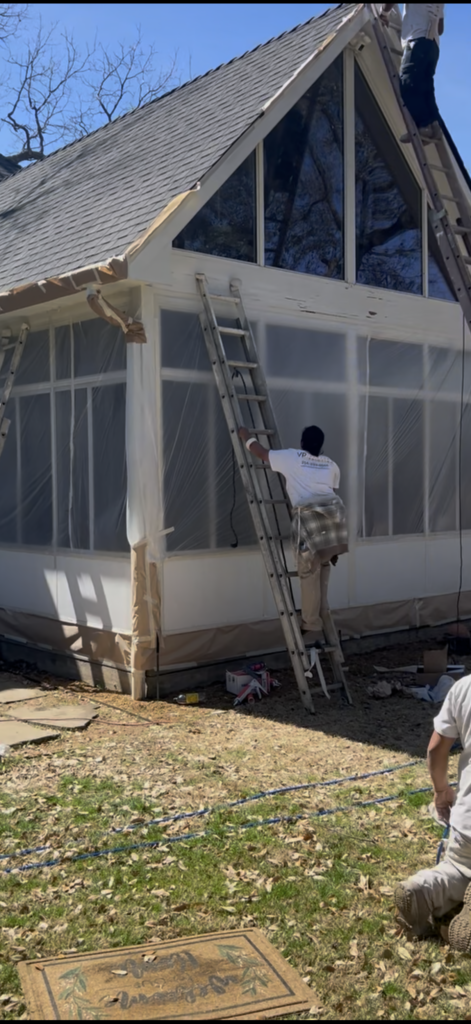
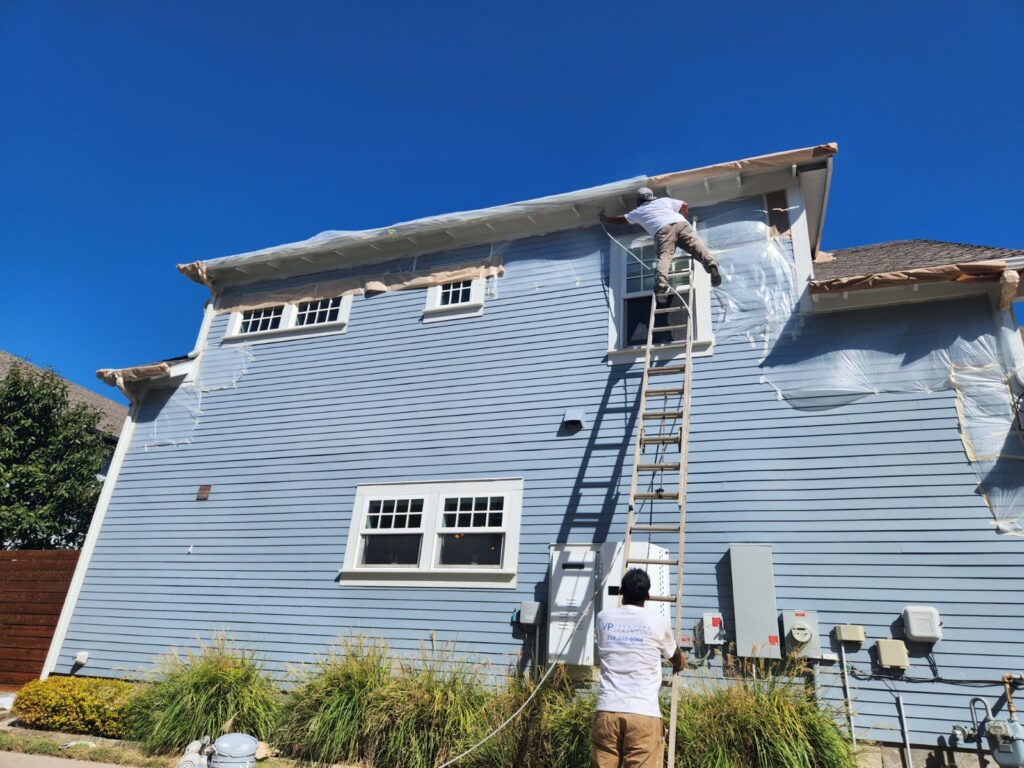
Scaffolding and lift equipment allow professionals to reach two story stucco safely and efficiently. Working from extension ladders in summer heat is dangerous and often produces uneven results. A stable platform lets the painter focus on technique and consistency. It also means the entire wall is coated in a single session, which prevents lap marks where one day’s work meets the next.
Proper tarping and protection equipment keeps the rest of the property safe during a hot weather paint job. Drop cloths, masking film, and plastic sheeting all behave differently in extreme heat, and professionals use products rated for the conditions. Cleanup is faster and the home stays protected throughout the project.
The Experience Advantage for Painting Stucco in Triple Digit Heat
A seasoned painter reads the weather, the wall, and the product data sheet at the same time. That kind of judgment comes from working hundreds of stucco homes in conditions ranging from spring rains to August heat waves. Recognizing when a wall is too hot, when humidity is climbing, or when a storm front will change conditions in the afternoon is part of the trade. Homeowners benefit from that experience without ever seeing the decisions being made.
Color matching on stucco is another area where experience pays off. Stucco texture absorbs and reflects light differently than smooth surfaces, so a color that looks perfect on a sample card can look completely different on a textured wall. A professional painter can advise on color selection based on sun exposure, architectural style, and neighborhood standards. That guidance helps homeowners avoid costly color regrets.
Problem solving during the project also depends on experience. Surprise issues like hidden water damage, previous paint failures, or substrate problems all need quick decisions to keep the job on schedule. A crew that has seen these situations before knows how to address them without inflating the budget. That confidence shows up in the finished product.
Why Choose Venture Painting for Painting Stucco in Triple Digit Heat
Venture Painting has built a strong reputation across Plano, Allen, Richardson, and surrounding communities for honest, high quality exterior work. Owner Zeb Van Pelt leads every project with a focus on detailed prep, clear communication, and crews that show up on time and treat your property with respect. Free estimates come with clear, honest pricing, so there are no surprises once the work begins. Stucco painting in Texas heat requires a contractor who understands the conditions, and that is exactly what Venture Painting delivers.
The team specializes in both interior and exterior painting, with deep experience on stucco, fiber cement, brick, and wood siding. Every project starts with a thorough assessment, including surface temperature checks, moisture readings, and a written scope of work. Clean, organized crews protect your landscaping, walkways, and outdoor living spaces from start to finish. The result is a smooth process and a finish that lasts.
Plano homeowners and the surrounding high value communities choose Venture Painting because the work speaks for itself. Friendly, professional service combined with proper trade knowledge means your stucco project gets done the right way the first time. Need expert exterior painting in Plano or nearby cities? Click here for our exterior painting service and schedule your free estimate today.