

Why Your Garage Door Paint Is Failing Faster Than Everything Else
Your garage door takes more abuse than any other painted surface on your home. It faces direct sun for hours each day, absorbs heat that warps the panels, and gets sprayed with sprinklers, dust, and road grime. Most Plano homeowners notice the paint chalking, peeling, or fading on the garage door long before any other exterior surface shows wear. The metal substrate expands and contracts with every temperature swing, which breaks down the paint bond from underneath. Cheap coatings and skipped prep work make the problem worse. Spring is the right time to address it before the brutal Texas summer arrives. A proper repaint done now can last seven to ten years instead of two.
The Real Reasons Garage Door Paint Fails Faster Than Other Exterior Surfaces
Garage doors fail because they sit at the intersection of heat, moisture, and movement. Most doors face south or west in North Texas neighborhoods, soaking up UV rays that destroy paint binders. The steel or aluminum surface heats up to 150 degrees on a summer afternoon, then cools rapidly at night. That thermal cycling pulls coatings apart at the molecular level. Add in the fact that builders often use the cheapest factory finish available, and you have a recipe for early failure. Understanding the cause is the first step to fixing it for good.
Heat and UV Exposure Make Garage Door Paint Fail Faster
Direct sunlight is the single biggest reason your garage door paint is failing faster than your siding or trim. UV radiation breaks the chemical bonds inside paint resins, which causes chalking, fading, and brittleness. Your front door might sit under a porch overhang, but your garage door has zero protection from the sun. In Plano, summer surface temperatures on a dark garage door can exceed 160 degrees. Paint that is not formulated for high heat will blister and lose its color in just two or three seasons. Lighter colors reflect more heat, while darker shades absorb it and break down faster.
The metal panels themselves act like a heat sink, holding warmth long after the sun goes down. This trapped heat continues cooking the paint film from behind. Cheaper acrylics simply cannot handle this kind of stress. High-quality 100 percent acrylic exterior paints with UV inhibitors perform far better. Some manufacturers now offer coatings specifically rated for metal doors and high-heat applications. Choosing the right product matters as much as the prep work.
Reflective additives and lighter base colors also extend the life of your finish. A pure white or light beige garage door can stay 30 degrees cooler than a dark brown or navy one. That temperature difference translates directly into years of added paint life. If you love a darker color, plan on repainting more often or invest in a premium heat-reflective formula. Need exterior painting services? Click here for our exterior painting service and get a free estimate from a local team that knows Texas heat.
Thermal Movement Causes Garage Door Paint to Fail at the Seams
Metal expands when it heats up and contracts when it cools. Your garage door goes through this cycle every single day. Each panel pushes and pulls against its neighbors, and the joints flex constantly. Paint that lacks flexibility cracks along these seams within a year or two. You will usually see the first failures right at the horizontal panel lines and around the hardware. Those tiny cracks let in moisture, which accelerates rust and peeling.
The hinges, rollers, and tracks also vibrate the door every time it opens or closes. A typical Plano homeowner cycles their garage door three to five times a day. That adds up to thousands of vibrations a year, all working against the paint film. Stiff or oil-based paints cannot keep up with that level of movement. Modern flexible acrylic latex coatings stretch with the metal and stay intact much longer.
Proper surface preparation is the only way to handle thermal movement. Sanding the entire surface, scuffing glossy areas, and applying a bonding primer creates a foundation that moves with the door. Skipping primer is the fastest way to guarantee failure within a year. A trained crew knows exactly which primer works on aluminum versus steel and which top coat will stretch without splitting. That technical knowledge separates a five-year paint job from a one-year disaster.
Moisture and Sprinkler Damage Make Garage Door Paint Fail at the Bottom
Water is the silent killer of garage door paint, especially along the bottom panel. Sprinkler systems hit the lower section every morning, and rainwater splashes up from the driveway during storms. The bottom edge often sits in a small puddle for hours after a rainfall. That constant moisture exposure causes the paint to bubble, peel, and rust. You will almost always see the worst damage in the bottom 18 inches of the door.
Steel garage doors are particularly vulnerable because rust spreads underneath the paint film. Once oxidation starts, it pushes the coating off from below. By the time you see a small bubble, the rust pocket behind it is usually three or four times larger. Catching this early is critical; sanding it down, treating with a rust-converting primer, and recoating can save the door. Wait too long, and you may need a full panel replacement.
Aluminum doors resist rust but still suffer from oxidation that looks like a chalky white film. This oxidation prevents new paint from bonding properly. A proper prep job includes washing, scrubbing with a degreaser, and rinsing thoroughly before any sanding begins. Adjusting your sprinkler heads to keep water off the door is one of the easiest fixes a homeowner can make. Combine that with a quality repaint, and your door will look great for years.
How to Fix and Prevent Garage Door Paint From Failing Again
Repainting a garage door correctly is more involved than most people expect. The prep work takes longer than the actual painting, and that is exactly how it should be. Cutting corners on cleaning, sanding, or priming guarantees the same failure within a year or two. The good news is that a properly executed paint job can last close to a decade. The process starts with understanding the door material and ends with selecting paint engineered for that surface. Spring weather in North Texas creates the perfect conditions for this kind of project.
The Right Prep Steps Stop Garage Door Paint From Failing Again
Cleaning is step one and step two and step three. Pressure washing removes the loose dirt, but a hand wash with a degreasing detergent gets into the textured panels and grooves. Pollen, pollution, and oxidation all need to come off before any sanding begins. Skipping this stage causes contaminants to get pressed into the new finish. Plano air carries plenty of dust and pollen in spring, so this matters more here than in other climates. Rinse thoroughly and let the door dry completely before moving on.
Sanding is what creates a mechanical bond between the old surface and the new paint. A medium-grit sanding pad scuffs the existing finish so the primer has something to grip. Areas with peeling or rust need more aggressive treatment, sometimes down to bare metal. Feather the edges of any chips so they will not show through the new coats. Wipe the entire door down with a tack cloth or damp microfiber to remove all sanding dust. This step alone separates professional results from amateur attempts.
Priming is non-negotiable on any metal door, especially one that has already failed once. A direct-to-metal bonding primer or rust-inhibiting primer locks down the surface and gives the topcoat something to adhere to. Apply primer to the entire door, not just the patched areas, for the most uniform finish. Two thin coats beat one thick coat every time. Let each layer cure fully according to the manufacturer instructions; rushing this step ruins everything that follows. Need help with the prep? Reach out to our team for a free estimate at Venture Painting.
Choosing the Right Paint Stops Your Garage Door Paint From Failing
Not all exterior paints belong on a garage door. Standard wall paints lack the flexibility and UV resistance needed for a metal surface in full sun. Look for a 100 percent acrylic latex labeled for exterior metal or multi-surface use. Premium product lines from major manufacturers usually carry warranties of 15 years or more when applied correctly. The extra ten or fifteen dollars per gallon is the cheapest insurance you can buy for this project.
Sheen selection matters too, both for looks and for performance. Satin and semi-gloss finishes shed dirt and water better than flat or matte options. They also hold up better to scrubbing when you need to clean off bug splatter or sap. Most homeowners prefer satin because it hides minor surface imperfections while still wiping clean easily. Semi-gloss highlights every flaw, so the prep work has to be flawless if you choose that route.
Color choice affects longevity in ways many homeowners overlook. Darker colors fade faster and absorb more heat, which shortens paint life dramatically. If you want a deep color, ask about heat-reflective formulations that look dark but reject infrared radiation. Always confirm the color matches your HOA guidelines before purchasing. A professional crew can pull samples, test them on the door, and let you see how each option looks at different times of day.
Application Technique Determines if Your Garage Door Paint Fails Again
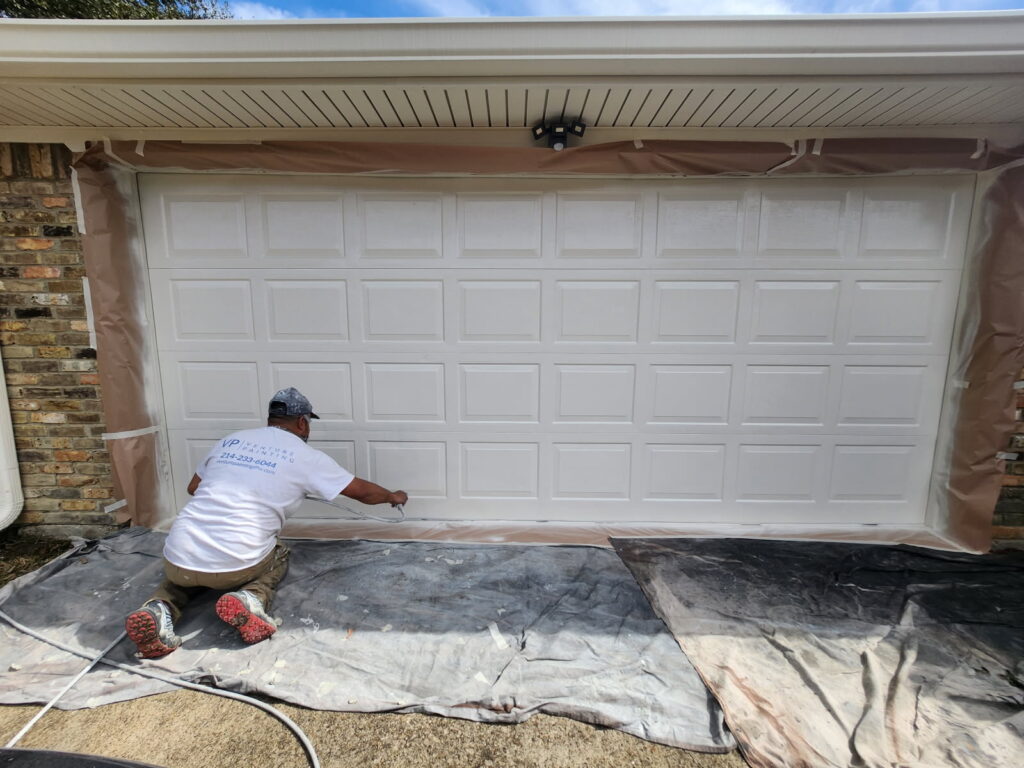
Brush, roller, and sprayer each have a place in a garage door repaint. Spraying produces the smoothest, most factory-like finish on a smooth steel door. Rolling works well on textured panels and gives you better control over thickness. Brushes handle the edges, hinges, and detailed sections that rollers cannot reach. The best results come from combining all three techniques in the right order.
Two coats are the minimum for proper coverage and durability. One coat looks acceptable on day one but fails much faster than a two-coat system. Allow the recommended dry time between coats; humidity and temperature both affect cure speed in Plano spring weather. Painting in direct sun causes the paint to skin over before it levels, leaving lap marks and roller texture. Early morning or late afternoon shade gives you the best window for application.
Detail work is where amateur jobs fall apart. The seams between panels, the hardware mounting points, and the bottom weather seal all need careful attention. A trained painter masks these areas, paints them in the correct order, and removes tape at the right moment to avoid pulling up fresh paint. Touch-ups on missed spots should happen before the paint cures completely. This level of attention is exactly why hiring a local crew often saves money compared to a do-it-yourself attempt that needs redone.
Why You Need a Professional Painter for Your Garage Door Repaint
Garage door painting looks simple from the driveway, but the details determine whether your investment lasts one year or ten. A professional crew brings the right products, the right tools, and the experience to handle every variable. They also carry insurance, which protects you if something goes wrong. Spring is the busiest season for exterior painting in Plano, so booking early matters. Venture Painting offers free estimates and clear, honest pricing for every project.
A Professional Stops Your Garage Door Paint From Failing Prematurely
Hiring a professional saves you the cost of doing the project twice. Most do-it-yourself garage door paint jobs fail within 18 months because of skipped prep steps or wrong product choices. A professional crew does the cleaning, sanding, priming, and painting in the correct sequence with the correct materials. They also know how to identify problems like rust pockets or panel damage that need addressing before painting. That diagnostic eye is something only experience can provide.
Time is the other major factor most homeowners underestimate. A proper garage door repaint takes a full day for a single door and longer for a double. Most homeowners do not have eight uninterrupted hours of weekend time to dedicate to one surface. A professional crew finishes the job in one day with better results. You get your weekend back and a finish that lasts.
Safety also plays a role, especially when working with ladders or electric door openers. The springs on a garage door carry enough tension to cause serious injury if mishandled. A trained crew knows how to work around the hardware safely and how to disconnect the opener when needed. They also use drop cloths and masking to protect your driveway, landscaping, and house siding. That peace of mind is worth a lot.
Local Knowledge Helps Stop Garage Door Paint From Failing in Texas Heat
Plano weather is unique, and the painters who work here every day understand it better than anyone else. North Texas summers push exterior paints to their absolute limits. A local crew knows which products perform in 105-degree heat and which ones fail by August. They also know which colors hold up in this climate and which ones fade fast. That regional expertise is impossible to get from a national chain or a one-time contractor.
Local crews also understand HOA rules in communities across Plano, Allen, Murphy, Richardson, and beyond. Most neighborhoods restrict garage door colors to a specific approved palette. A professional helps you navigate these guidelines so your project does not get flagged after completion. They have probably painted dozens of doors in your subdivision already. Need service in a specific area? Check our Allen, TX location page or Richardson, TX location page for local details.
Established local painters also offer warranties backed by years of work in your community. They are not going anywhere, so honoring a five-year warranty actually means something. National crews and traveling contractors are much harder to track down when issues arise. Choosing a local team protects your investment long after the paint dries. It also keeps your money in the community.
Why Choose Venture Painting for Your Garage Door Repaint
Venture Painting brings detailed prep work and long-lasting results to every project in Plano and the surrounding communities. Owner Zeb Van Pelt personally oversees the work and stands behind the quality. Our crews are clean, organized, and respectful of your home and property. We treat your driveway, landscaping, and family with the same care we give the paint itself. That ethos shows up in every job we complete.
Our free estimates come with clear, honest pricing and no surprises. We walk you through the prep steps, the products we recommend, and the timeline before any work begins. You will know exactly what you are paying for and why. We specialize in both interior and exterior painting, so we understand how a single failing surface affects the whole look of your home. Our team has the training to address it correctly the first time.
Serving Addison, Allen, Murphy, Parker, Plano, Richardson, and Sachse means we know these neighborhoods inside and out. We understand the climate, the HOA rules, and the design trends in every community we serve. Need a repaint before the heat arrives? Click here to visit our exterior painting service page and book your free estimate today. We are ready to give your garage door a finish that finally lasts.