

Cabinet Painting vs Cabinet Replacement: When Refinishing Stops Making Sense
Homeowners across Plano face this decision every summer when kitchen projects move to the top of the list. Cabinet painting costs a fraction of what full replacement costs, and the results can look brand new when the work is done right. Replacement makes sense in certain situations, but many homeowners jump to it before they understand what refinishing can actually do. The right choice depends on the condition of your cabinet boxes, the material they are made from, and what you want your kitchen to look like when the project is finished. A cabinet in solid structural shape is almost always a candidate for refinishing. A cabinet with rotting particleboard, failed hinges, and swollen panels is not. This guide explains how to compare cabinet painting vs cabinet replacement so you can spend your money where it counts. By the end, you will know exactly which path fits your kitchen and your budget.
Cabinet Painting vs Cabinet Replacement: Comparing Cost, Condition, and Results
The comparison starts with three factors: what each option costs, what condition your cabinets are in, and what final result you expect. Cabinet refinishing in the Dallas area typically runs one third to one half the cost of full replacement, and the timeline is measured in days instead of weeks. Replacement involves demolition, ordering lead times, installation labor, and often new countertops because the old ones rarely survive removal. Refinishing keeps your existing layout, your existing countertops, and your kitchen functional through most of the process. That said, refinishing cannot fix structural failure, and it cannot change your kitchen layout. Paint transforms surfaces; it does not rebuild boxes. Homeowners who understand this distinction make better decisions and avoid paying for work they did not need. The sections below break down each factor so you can evaluate your own kitchen honestly.
The Real Cost of Cabinet Painting vs Cabinet Replacement
Full cabinet replacement in a typical Plano kitchen often lands between $15,000 and $40,000 depending on the size of the kitchen and the quality of the new cabinetry. Stock cabinets sit at the bottom of that range, semi custom in the middle, and full custom at the top. That price includes demolition, disposal, new boxes, new doors, hardware, and installation labor. It usually does not include the new countertops, plumbing reconnection, or drywall repair that replacement projects trigger. Those extras add thousands more before the first coat of anything touches a surface. Many homeowners start a replacement project with one budget and finish with a much larger one. The hidden costs are the reason replacement quotes deserve careful reading. Always ask what is excluded before you sign anything.
Professional cabinet painting for that same kitchen typically runs between $3,000 and $10,000 depending on the number of doors and drawers, the condition of the surfaces, and the finish system used. That price includes degreasing, sanding, priming, spraying, and reinstallation of all doors and drawer fronts. New hinges and hardware can be added for a modest amount on top. The countertops stay, the backsplash stays, and the plumbing never moves. There is no demolition dumpster in your driveway and no six week wait for a cabinet order. The savings are large enough that many homeowners put the difference toward new appliances or flooring. When the boxes are sound, painting delivers the same visual transformation for a third of the money. That math is hard to argue with.
Cost only tells part of the story, though, because value depends on how long each option lasts. A professionally refinished cabinet with a catalyzed or urethane finish can hold up for 10 to 15 years with normal care. New stock cabinets made from particleboard and thermofoil sometimes fail sooner than that, especially around sinks and dishwashers where moisture attacks the material. Spending $25,000 on new cabinets that fail in eight years is worse than spending $6,000 on a refinish that lasts twelve. Solid wood boxes from the 1980s and 1990s are often better built than budget cabinets sold today. Refinishing preserves that quality instead of throwing it in a landfill. Evaluate longevity alongside price, not just the sticker number. The cheapest option over 15 years is frequently the refinish.
Cabinet Condition: When Painting Works and When Replacement Wins
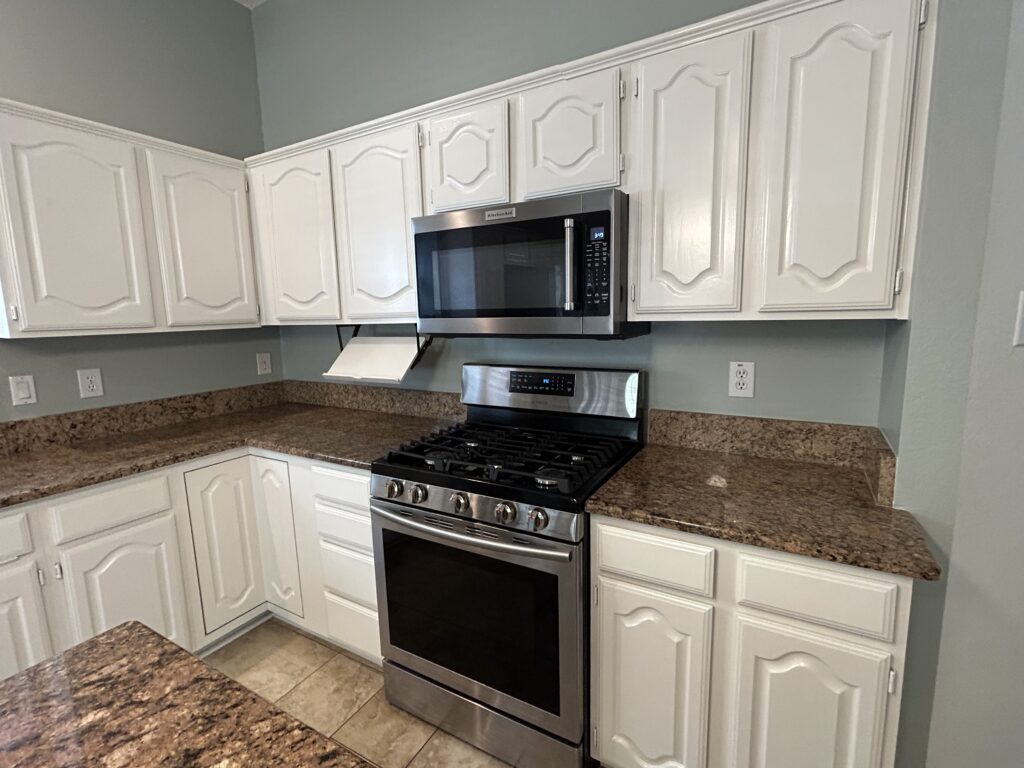
Cabinet painting works when the boxes, face frames, and doors are structurally sound. Solid wood, plywood, and MDF all take paint well when they are properly prepped and primed. Minor dings, scratches, worn finishes, dated stain colors, and yellowed surfaces are all cosmetic problems that refinishing solves completely. Loose hinges can be tightened or replaced, and small chips can be filled before priming. Even heavy grease buildup near the range is fixable with proper degreasing and sanding. If you open your cabinet doors and the boxes feel rigid, the shelves sit flat, and nothing wobbles, you have refinishing candidates. Most kitchens built before 2005 in Plano and Richardson fall into this category. The bones are good; only the surface is tired.
Replacement wins when the structure itself has failed. Particleboard that has swollen from water leaks under the sink cannot be painted back to health. Delaminating panels, sagging shelves that have permanently bowed, and face frames that have separated from the boxes are structural problems, not cosmetic ones. Thermofoil doors that are peeling at the edges are another red flag, because the vinyl layer keeps lifting even after paint goes over it. Cabinets damaged by long term moisture, pest activity, or fire need to come out. Paint over rot is money wasted, and an honest painting contractor will tell you that during the estimate. A good rule: press firmly on the bottom panel under your sink. If it flexes, crumbles, or feels soft, that cabinet is past saving.
Many kitchens fall somewhere in the middle, and that is where a hybrid approach saves real money. One water damaged sink base can be replaced while the remaining twenty cabinets get refinished to match. New doors can be ordered for a few damaged fronts while the rest are painted. This targeted strategy fixes the actual problems without paying replacement prices for cabinets that were fine. A professional assessment identifies exactly which components need what. Homeowners who skip that assessment often replace entire kitchens over two bad cabinets. That is the most expensive mistake in this entire decision. Get eyes on the specific damage before you commit to anything. Thinking about refinishing your kitchen? Click here for our cabinet refinishing service and request a free assessment.
The Finished Look: What Cabinet Painting Delivers vs What Replacement Delivers
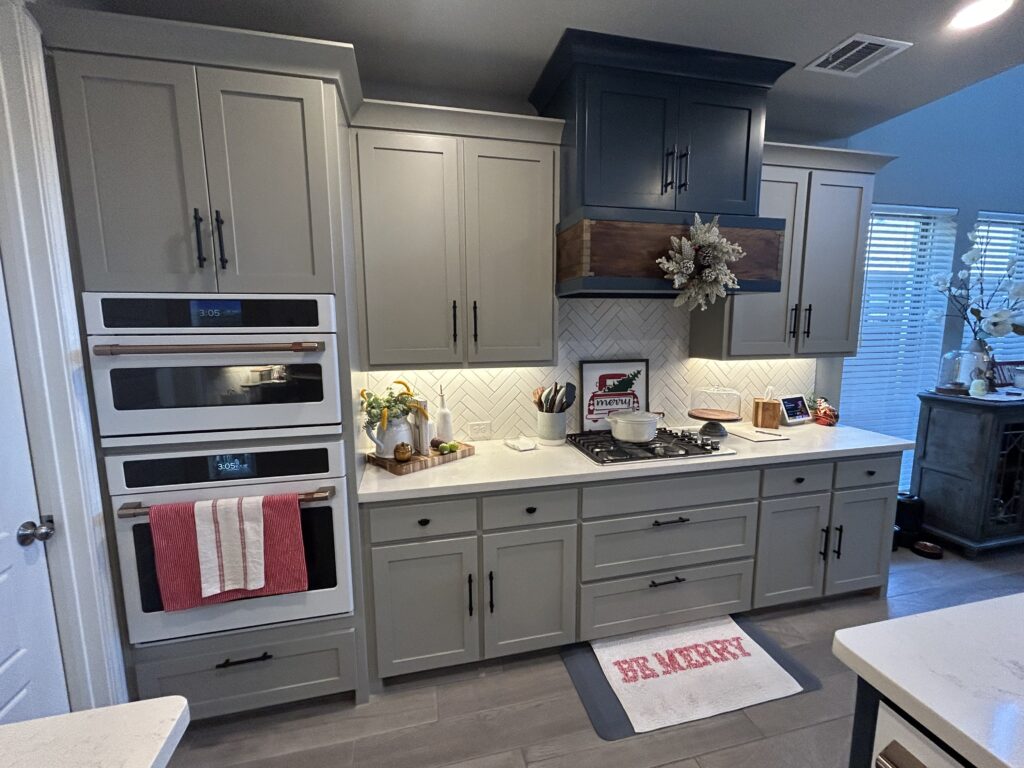
Modern cabinet refinishing does not look like a DIY brush job, and that misconception costs homeowners thousands. Professional crews spray cabinet doors with fine finish equipment in controlled conditions, producing a smooth factory style surface. The process starts with full degreasing, then sanding, then a bonding primer designed for cabinetry, then multiple sprayed topcoats. High quality cabinet enamels cure hard and resist chipping, fingerprints, and kitchen grease. Doors and drawer fronts are removed, labeled, and finished flat so gravity works with the finish instead of against it. The result is a surface most people cannot distinguish from new cabinetry. Color options are nearly unlimited, from bright whites to deep greens and blues. If your only complaint is the look of your cabinets, painting solves it completely.
Replacement delivers something painting cannot: a new layout and new functionality. If your kitchen needs an island where there was none, taller upper cabinets, deeper drawers, or a relocated sink, refinishing does not help you. New cabinetry also brings modern conveniences like soft close hinges, full extension drawer slides, pull out trash bins, and built in organizers. Some of those upgrades can be retrofitted into existing boxes, but not all of them. Homeowners planning a full kitchen remodel with wall changes and new plumbing should replace, because the cabinets are coming out anyway. In that scenario, painting old boxes makes no sense. The renovation scope decides the answer, not the paint.
Resale value matters in this comparison too, especially in high value Plano neighborhoods. Freshly painted cabinets in a current color photograph beautifully in listings and remove a major buyer objection. Real estate data consistently shows minor kitchen updates recovering more of their cost at sale than major kitchen overhauls. A $6,000 refinish that lifts your sale price is a better investment than a $30,000 replacement that recovers only part of its cost. Buyers care that the kitchen looks clean, bright, and current; they rarely ask what year the boxes were built. If you are selling within a few years, refinishing is almost always the smarter financial play. Save the full remodel budget for a house you plan to stay in. Paint gives you the visual payoff at a fraction of the spend.
When Cabinet Refinishing Stops Making Sense for Your Kitchen
Refinishing is the right call most of the time, but there are clear situations where it stops making sense. Knowing these situations protects you from paying for prep and paint on cabinets that should have been removed. Structural failure is the biggest disqualifier, followed by certain materials that reject coatings, and finally project goals that require new construction. A reputable painting contractor will walk your kitchen and flag these issues before quoting the job. Contractors who quote cabinet painting sight unseen, without inspecting the boxes, are the ones to avoid. The signs below are the same ones professional estimators look for during an assessment. Learn them and you can pre screen your own kitchen in twenty minutes. Honest evaluation now prevents an expensive redo later.
Signs Cabinet Refinishing Stops Making Sense: Structural Damage
Water damage is the number one reason cabinet refinishing stops making sense. Sink bases absorb years of small leaks from supply lines, drain connections, and dishwashers, and particleboard swells permanently once it gets wet. Swollen board loses its structural integrity and crumbles under fastener pressure, which means new hinges and slides have nothing solid to grip. Paint will stick to the surface, but the cabinet underneath keeps deteriorating. Look for dark staining, a musty smell, bubbling along panel edges, and bottoms that sag or flex. Mold growth inside a cabinet is a health issue on top of a structural one. These cabinets need replacement, and often the drywall behind them needs inspection too. Need the walls checked while the cabinet is out? Click here for our drywall repair service.
Joint failure is the second structural disqualifier. Face frames that have pulled away from cabinet boxes, stiles that have cracked at the hinge screws, and shelves that have permanently bowed under load all signal a cabinet at the end of its life. Screws that spin in stripped holes across multiple doors mean the substrate can no longer hold hardware. A single stripped hole is fixable with wood filler or a dowel repair; a kitchen full of them is not worth the labor. Drawer boxes with separated corners and slides that have torn out of their mounts fall in the same category. These repairs individually are cheap, but when they multiply across the whole kitchen, the repair labor approaches replacement cost. Count the failures before you decide. A handful is repairable; a pattern is terminal.
Age related fatigue in low quality construction is the third sign. Builder grade cabinets from certain eras were assembled with staples, hot glue, and thin particleboard that was never meant to last thirty years. When you can flex a cabinet side by hand or watch the whole run shift when you lean on the counter, refinishing that structure is throwing good money after bad. Compare that to solid wood or plywood boxes from the same era, which are often rock solid and perfect refinishing candidates. Material quality, not age alone, determines the verdict. A 1985 oak kitchen with plywood boxes will outlast a 2015 particleboard kitchen every time. Judge each cabinet on its construction. A professional estimator can make this call in minutes during a free walkthrough.
Cabinet Materials Where Refinishing Stops Making Sense
Thermofoil is the material that gives refinishing the most trouble. These doors are MDF wrapped in a thin vinyl film that was heat sealed at the factory, and Texas kitchens are hard on them. Heat from ovens, ranges, and even strong sunlight causes the vinyl to lift and peel at the edges, usually starting near the appliances. Once peeling begins, it spreads, and paint applied over loose vinyl fails along with the vinyl. Fully intact thermofoil can sometimes be painted with specialized bonding primers, but peeling thermofoil cannot be reliably saved. The common fix is ordering new paintable doors while refinishing the boxes, which still costs far less than full replacement. Ask your estimator to inspect every door edge before quoting. Peeling that is visible on two doors is usually starting on ten more.
Laminate and melamine cabinets sit in a gray zone that depends entirely on adhesion prep. These slick surfaces reject standard paint, and countless DIY failures come from skipping the bonding primer they require. Professionals scuff sand the laminate, clean it thoroughly, and apply an adhesion primer engineered for slick substrates before any color goes on. When that process is followed, painted laminate holds up well. When the laminate itself is chipped, bubbled, or separating from the substrate underneath, no primer can fix it. Delamination means moisture or glue failure inside the panel, and it only gets worse. Tap suspect areas and listen for a hollow sound that indicates separation. Solid laminate paints fine; failing laminate does not.
Previously painted cabinets with failing DIY coatings deserve their own mention. Many Plano homeowners inherited kitchens where a previous owner rolled latex wall paint over glossy cabinets without sanding or priming. That paint peels in sheets, and every loose layer has to come off before a proper finish can go on. Stripping and sanding multiple failed layers adds significant labor, and in extreme cases the prep cost erases the savings of refinishing. Most of the time the doors can be stripped or replaced while the frames are corrected, keeping the project affordable. A professional will assess how much of the old coating must be removed versus how much is sound enough to sand and prime over. The answer changes the quote substantially. Never let anyone paint over peeling paint; the new finish will fail exactly where the old one did.
Project Goals Where Cabinet Refinishing Stops Making Sense
Layout changes make refinishing pointless because paint cannot move a cabinet. If your kitchen plan involves removing a wall, adding an island, relocating the range, or reworking the work triangle, the existing cabinetry is coming out regardless. Refinishing boxes that will be demolished in two years wastes the entire investment. The same logic applies to major size changes, like swapping 30 inch uppers for 42 inch uppers that reach the ceiling. New configurations require new boxes, full stop. In a gut renovation, put your money into quality new cabinetry and skip the interim paint job. Refinishing is a preservation strategy; it only makes sense for cabinets you intend to keep. Match the method to the plan.
Functional upgrades sometimes tip the decision toward replacement as well. Homeowners who want deep drawer bases instead of doors with shelves, built in pantry pull outs, appliance garages, or integrated lighting channels are describing new cabinetry features. Some upgrades retrofit easily: soft close hinges, new slides, and roll out trays install into most existing boxes. Others require the box itself to be built differently. List the features you actually want, then find out which ones retrofit and which ones do not. If most of your wish list requires new construction, replacement is honest with your goals. If the list is mostly hardware and organization, refinish and retrofit for a fraction of the cost. The feature list, written down, usually makes the answer obvious.
Timeline and disruption tolerance round out the decision. Cabinet replacement takes a kitchen out of commission for two to six weeks between demolition, installation, and the countertop template and fabrication cycle that follows. Custom orders can push lead times to two or three months before installation even starts. Refinishing typically wraps in three to five days, and the kitchen stays partially usable through most of it. Families who cannot live without a kitchen for a month have a practical reason to refinish. Summer is a popular season for cabinet projects in North Texas precisely because the fast turnaround fits between vacations and the school year. If speed matters, refinishing wins by a wide margin. If you have the patience and the budget for a full remodel, replacement is on the table.
Why You Need a Professional Cabinet Assessment Before You Decide
The painting vs replacement decision comes down to details you cannot see from the middle of the kitchen. Substrate condition, moisture damage, coating adhesion, and material type all require hands on inspection to evaluate correctly. A professional assessment identifies exactly which cabinets are refinishing candidates and which ones need to go. That information turns a guess into a plan and often saves homeowners tens of thousands of dollars. Free estimates make this step risk free, so there is no reason to skip it. Get the assessment before you get attached to either option.
Get a Free Cabinet Refinishing Estimate Before Committing to Replacement
Cabinet dealers and remodeling contractors profit from replacement, so their advice naturally leans that direction. A painting contractor who inspects your kitchen gives you the other half of the picture. Between the two quotes, the real condition of your cabinets becomes clear. Many homeowners discover their supposedly worn out kitchen is a straightforward refinishing project. The estimate visit takes under an hour and costs nothing. That hour is the cheapest insurance in home improvement.
During the assessment, expect the estimator to open doors, test hinges, press on panels, and inspect the sink base closely. Good estimators check door edges for peeling, look for previous paint failures, and note grease buildup that affects prep time. They should tell you plainly if any cabinets are not worth painting. An estimator who quotes without touching a single cabinet is guessing with your money. Ask direct questions about primer systems, spray versus brush application, and cure times. The answers reveal how professional the operation really is.
Written estimates should itemize prep work, priming, finish coats, and door handling. Clear pricing protects you from surprise charges once the project starts. Compare the refinishing quote against your replacement quotes with the hidden costs of replacement included. Put countertops, plumbing, drywall, and disposal into the replacement column where they belong. The gap between the honest totals is usually dramatic. Numbers on paper make this decision easy.
Professional Cabinet Painting Protects the Investment Refinishing Makes Sense For
Once you decide refinishing makes sense, execution quality determines how long it lasts. Professional cabinet painting uses degreasers, adhesion primers, and hard curing enamels that DIY projects rarely include. Doors get sprayed flat in controlled conditions for a smooth, even film. Proper cure time between coats builds a finish that survives daily kitchen abuse. Skipping any of these steps produces the chipping and peeling that gives cabinet paint a bad name. The system is the product, not just the color.
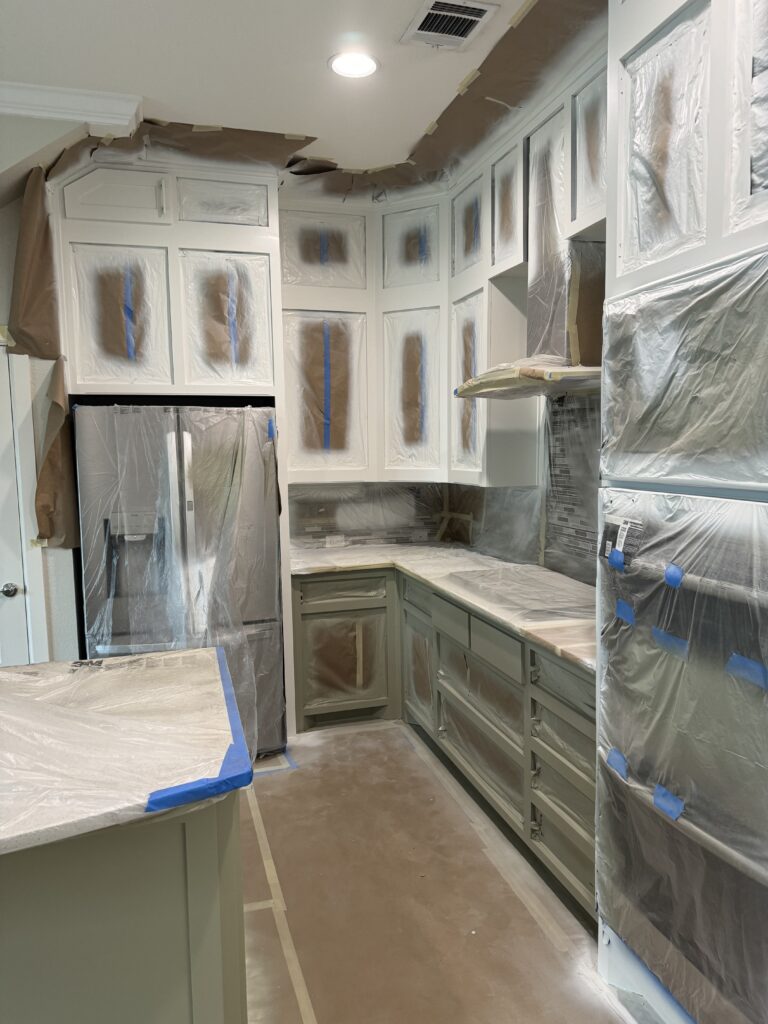
Professional crews also protect your home during the work. Countertops, floors, and appliances get masked and covered before any sanding begins. Dust control matters because cabinet prep generates fine particles that travel. Doors and hardware are labeled so every piece returns to its original position. Respectful, organized crews finish faster and leave the kitchen cleaner than they found it. That discipline shows up in the final result.
Durability is the payoff for hiring professionals. A properly executed cabinet finish resists moisture, grease, and fingerprints for a decade or more. Touch ups stay rare because the enamel cures hard instead of staying soft like wall paint. Warranties from established companies back the work in writing. Cheap cabinet painting that fails in two years costs more than quality work that lasts twelve. Buy the finish once and buy it right.
Why Choose Venture Painting for Cabinet Refinishing in Plano
Venture Painting specializes in cabinet refinishing for homeowners across Plano, Allen, Richardson, Murphy, and nearby communities. Our crews are clean, organized, and respectful of your home from the first day to the final walkthrough. We build every project on detailed prep work because prep is what makes cabinet finishes last. Free estimates come with clear, honest pricing and no pressure. If your cabinets are not good refinishing candidates, we will tell you straight. That honesty is the foundation of how we do business.
Our team handles the full process: degreasing, sanding, priming, spraying, and precise reinstallation of every door and drawer front. We work with premium cabinet enamels chosen for hardness and washability in busy Texas kitchens. Color consultations help you land on a shade that fits your home and your resale goals. Interior projects often pair cabinet work with fresh wall color for a complete transformation. Want the whole kitchen updated at once? Click here for our interior painting service.
Summer is the ideal season to refresh your kitchen before fall hosting begins, and our schedule fills quickly. A refinished kitchen in days, at a fraction of replacement cost, is the outcome our Plano neighbors call us for. Visit us at 2113 Northcrest Dr, Plano, TX 75075, or email zeb@venturepaintingdfw.com with photos of your cabinets for a quick opinion. Free estimates are always clear and always honest. Call Venture Painting today at (214) 233-6044 to schedule your cabinet assessment. Let us show you what your existing cabinets can become.