

Why Guest Rooms Feel Cold And The Paint Colors That Fix It
A guest room can sit at the exact same thermostat setting as the rest of your house and still feel like the coldest space under your roof. Some of that comes from how the room is built, and some of it comes from how the room is used, but a surprising share of it comes from the color sitting on the walls. Paint cannot raise the temperature of a room by a single degree, and any company that tells you otherwise is selling something. What paint absolutely does control is how the light in that room reads to the human eye, and light is what your brain uses to judge comfort in the first two seconds after you open a door. Cool colors bounce cool light, and cool light makes skin tones, bedding, wood floors, and furniture all look washed out and flat. Warm colors absorb some of that harshness and hand back a softer, fuller light that people describe as cozy without knowing why. With fall settling into North Texas and holiday visitors already booking flights, now is the right time to solve the problem instead of apologizing for it in December. Below is a breakdown of the real reasons guest rooms feel cold in Plano area homes and the specific paint colors that fix it.
Why Guest Rooms Feel Cold Before Your Guests Ever Arrive
Most guest rooms sit empty for weeks or months at a stretch, and that alone changes how the space performs compared to a bedroom in daily use. The door stays shut, the vent often gets closed to save on energy costs, and the air inside stops circulating the way it does everywhere else in the house. Layer on an exterior wall or two, a window that faces the wrong direction, and a wall color chosen a decade ago when cool gray was the standard, and the room begins working against you before anyone sets a suitcase down. The chill people report is a genuine sensory experience even when a thermometer on the nightstand reads seventy two degrees. Some of it is physical and some of it is visual, and the two feed each other in a way that makes the room feel worse than either problem would on its own. Once you understand which factors are structural and which are purely about color, the fix becomes far more affordable than most homeowners expect.
Why Guest Rooms Feel Cold When The Natural Light Runs Blue
Light has a color temperature, and the light entering a north facing window is measurably cooler and bluer than the light entering a window on the south or west side of a house. North facing rooms never receive direct sun at any point during the day, so everything inside them is lit by indirect skylight, which carries a strong blue cast. That blue light lands on your walls, bounces around the room, and colors every surface it touches, including the bedspread and the face of the person standing in the doorway. Guest rooms are frequently placed on the north side of a floor plan because builders reserve the sunnier exposures for primary bedrooms and living areas. During fall and winter the sun also sits lower in the sky and daylight hours shrink, which reduces the total amount of light reaching the room and deepens the effect. The result is a space that looks dim and gray by three in the afternoon even with the blinds fully open. Homeowners usually blame the window or the insulation when the light itself is doing most of the damage.
Cool paint on the walls of a cool light room compounds the problem instead of balancing it. A gray with a blue base under blue skylight reads almost silver, and a crisp white with a blue base can look faintly institutional in the same conditions. This is why a color that looked perfect in the showroom or in a neighbor’s sunny living room can look completely wrong once it goes up in your guest room. Light Reflectance Value, usually written as LRV, measures how much light a color bounces back on a scale from zero to one hundred. A color in the seventies or eighties returns most of the light it receives and keeps a dim room usable, while a color in the thirties absorbs the majority of it. In a north facing guest room with limited daylight, both the undertone and the LRV need to be chosen together rather than one at a time. Getting that pairing right is the single highest impact decision in the entire project.
Testing color the right way costs almost nothing and prevents an expensive mistake. Skip the small paper swatch taped to a wall, because the existing wall color behind it and the surrounding trim will distort your reading of it every time. Order or make large sample boards, at least twelve inches by twelve inches, and view them against a plain white background in the actual room. Look at each option in early morning light, again at midday, and once more at night under the lamp or overhead fixture your guests will actually use. Move the board to different walls, since the wall opposite the window behaves differently than the wall the window sits in. Bulb color matters as much as daylight here, and a fixture running cool white bulbs at 5000 Kelvin will fight a warm paint color all evening long. Swapping those bulbs to something in the 2700 to 3000 Kelvin range is a five dollar change that supports everything the paint is trying to do.
Why Guest Rooms Feel Cold Against Exterior Walls And Closed Vents
Thermal comfort is not just about air temperature, and this is where the physical side of the problem lives. Your body constantly radiates heat toward nearby surfaces, and when those surfaces are cold, you lose warmth to them and feel chilled even in warm air. A guest room built into a corner of the house often has two exterior walls plus a window, which means a large share of the room’s surface area is sitting against outdoor conditions. Older windows, worn weatherstripping, and gaps around outlets on exterior walls all let cold air trickle in at floor level. Attic access panels and can lights in the ceiling are common leak points in North Texas homes and are frequently overlooked during energy audits. None of these issues announce themselves loudly, which is why a room can feel drafty with no obvious source. The chill your guest notices at two in the morning is usually a combination of cold wall surfaces and slow air infiltration rather than a broken furnace.
Closing the supply vent in an unused room feels like smart energy management, but it often creates problems instead of savings. Most residential HVAC systems are balanced for the full square footage of the house, and shutting registers raises static pressure in the duct system, which can reduce efficiency and strain the blower. Meanwhile the room itself drifts several degrees below the rest of the house and its walls, floor, and furnishings all cool down with it. Reopening that vent a few hours before company arrives does not fix things, because the surfaces in the room hold their temperature long after the air warms up. The mattress, the pillows, and the closet contents all stay cold to the touch through the first night of a visit. Running the vent open for at least a day or two ahead of arrival gives the whole room time to catch up. Adding a small space heater is a temporary bandage, not a real solution, and it does nothing for how the room looks.
Being honest about what paint can and cannot do matters here, and it is the standard we hold ourselves to on every estimate. No paint product on the market meaningfully insulates a wall, and claims about heat reflective interior coatings do not hold up under real testing. What paint does is finish and unify the surface, which is why any air sealing, caulking, or wall repair should happen first and paint should happen second. Cracked drywall seams, nail pops, and gaps at the baseboard are all worth closing before the first coat goes on, both for appearance and for comfort. A wall with damage patched, sanded, and primed properly holds color evenly and does not telegraph shadows across the surface in low light. Guest rooms tend to accumulate this kind of neglect because nobody looks closely at a room they never use. Need those walls made right before the color goes on? Click here for our drywall repair service.
Why Guest Rooms Feel Cold When Paint Colors Carry Cool Undertones
Every neutral has an undertone, meaning a subtle bias toward a warmer or cooler hue that only becomes visible in context. A gray can lean blue, green, purple, or brown, and two grays that look identical on a paint chip can behave completely differently once they cover four walls. Cool undertones pull toward blue, violet, and green, which the eye associates with shade, water, and winter. Warm undertones pull toward yellow, red, and orange, which the eye associates with sunlight, wood, and firelight. This association is not decorating opinion, it is a consistent perceptual response that has been studied for decades. A room finished in a blue leaning gray will be described as cold by most people who walk into it, regardless of what the thermostat says. A room finished in a warm greige with the same LRV will be described as comfortable by those same people.
The gray trend that dominated home design from roughly 2010 through 2020 left a great many spare bedrooms in exactly this situation. Cool gray walls paired with bright white trim and a bright white ceiling create a high contrast, low warmth environment that photographs beautifully and lives poorly. Stark whites present the same issue in a different package, since a white with a blue base under blue north light can look almost gray in person. Builder grade flat white on the ceiling adds another cool reflective surface directly overhead. When every plane in the room is cool, there is nothing for the eye to warm itself against and the space reads as sterile. Guest rooms suffer from this more than other rooms because they are usually the least furnished space in the house. Fewer textiles, rugs, and wood pieces means fewer opportunities for warmth to enter through anything other than the wall color.
Identifying your current undertone is straightforward once you know the trick. Hold a sheet of plain printer paper flat against the existing wall and look at where the wall color shifts relative to the true white of the page. If the wall goes bluish, greenish, or purplish next to the paper, you have a cool undertone driving the room. If it goes creamy, tan, or slightly pink, you already have warmth to build on and may only need to adjust the depth or the sheen. Do this test on multiple walls, because the wall receiving direct light will read differently than the one in shadow. Also check the trim and the ceiling separately, since those are often a different product and a different base than the walls. Once you know what you are actually working with, choosing a replacement color becomes a decision rather than a gamble.
The Paint Colors That Fix A Cold Guest Room
The fix is not simply painting everything beige, and it is not covering the walls in a heavy dark color and hoping for the best. It is choosing a color with a warm undertone at an LRV appropriate for how much light the room actually receives, then supporting that choice with the right ceiling, trim, and sheen. A guest room with one small north facing window needs a different answer than a guest room with a large west facing window that catches afternoon sun. Depth also plays a role, because a saturated color creates a sense of enclosure that many people find comforting in a sleeping space. The goal is a room that feels settled and welcoming in the evening and still looks clean and bright at nine in the morning. Below are the three color strategies that consistently deliver that result in Plano area homes.
Warm Neutral Paint Colors That Fix A Cold Guest Room
Warm neutrals are the safest and most reliable path for a guest room that gets limited light, and they cover a much wider range than most homeowners realize. Creamy whites with a yellow or red base, soft tans, warm greige, and muted almond tones all keep an LRV high enough to bounce light while removing the blue cast that made the room feel chilly. Colors like a warm greige in the mid to high fifties LRV range or a soft warm white in the low eighties are common starting points for exactly this situation. The higher the LRV, the more of the available daylight the walls return to the room, which matters enormously in a space with one window. A warm white ceiling paired with warm white walls keeps the whole envelope consistent and prevents the cold ceiling effect entirely. These colors also pair well with almost any bedding, art, or furniture your guests bring into the picture. For a room used a few weeks a year, that flexibility has real value.
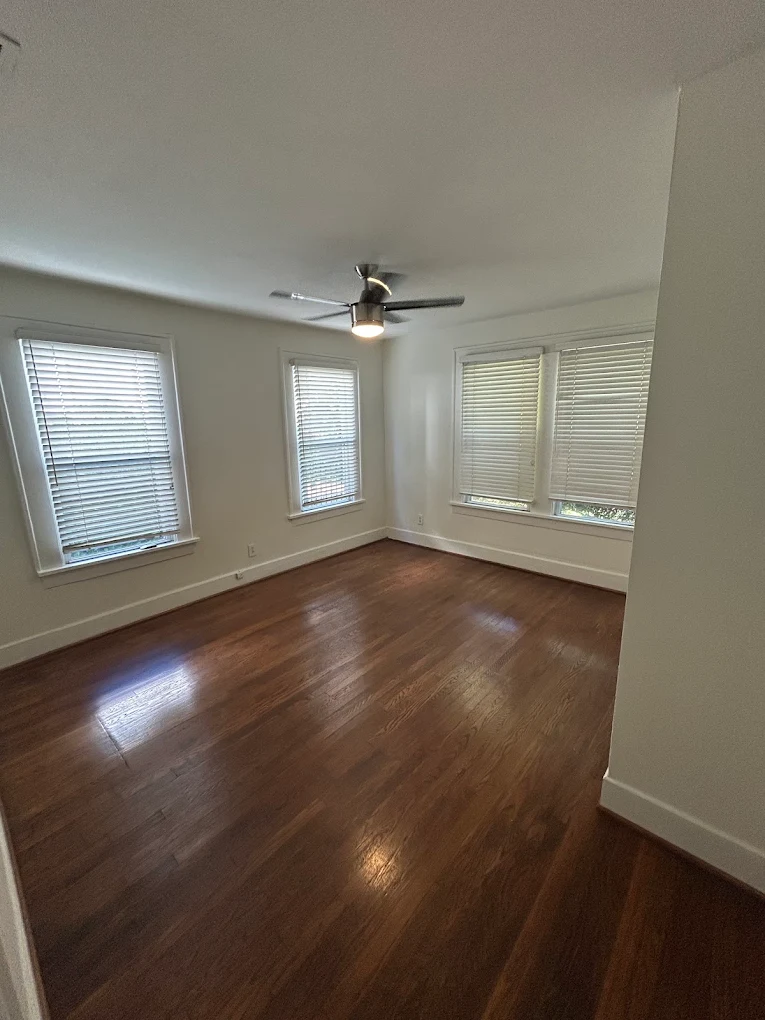
Undertone selection within the warm neutral family should be guided by whatever permanent finishes already exist in the room. Honey toned oak floors push yellow into the space and pair better with a greige carrying a slight brown or taupe base than with a strongly yellow cream. Cool toned gray luxury vinyl plank, which is extremely common in newer North Texas construction, needs a warm wall color to counterbalance it but can look muddy against a heavy gold based tan. Existing white trim should be evaluated too, because a warm wall next to a blue based white trim creates a visible clash along every edge. In many guest rooms the cleanest solution is repainting trim and walls together so the two products share a compatible base. That approach costs more upfront but removes the single most common source of disappointment after a color change. Careful pairing here is the difference between a room that looks intentional and a room that looks patched together.
Sheen deserves as much attention as color in a low light room and is frequently treated as an afterthought. Flat and matte finishes absorb light and hide surface imperfections beautifully, which suits older walls with texture variation or past repairs. Eggshell reflects slightly more light and cleans up better, making it a practical choice for a room where suitcases, strollers, and unfamiliar guests will bump the walls. Satin reflects more still and can help a very dim room, though it also highlights every dent and seam in the drywall underneath. In a guest room we usually recommend eggshell on walls with a satin or semigloss on trim and doors for durability and contrast. Modern matte products have improved considerably in washability, so the old tradeoff between appearance and cleanability is less severe than it once was. Ready to get this handled before the first visitor shows up? Click here for our interior painting service.
Deep And Saturated Paint Colors That Fix A Cold Guest Room
There is a second approach that works remarkably well in guest rooms and takes the opposite path from high LRV neutrals. Rather than fighting the low light, you lean into it with a deep, saturated, warm color that turns the room into a deliberate retreat. Warm olive, clay, terracotta, deep camel, muted brick, and warm charcoal with a brown base all create a sense of enclosure that reads as restful rather than dim. This works particularly well in small guest rooms, because a dark color blurs the corners of a room and makes the boundaries harder to read. The room stops feeling like a cramped box and starts feeling like a considered space. Guests sleeping in an unfamiliar house often sleep better in a darker room, which is a practical benefit on top of the visual one. The tradeoff is that the room will genuinely be darker during the day, so lighting has to carry more of the load.
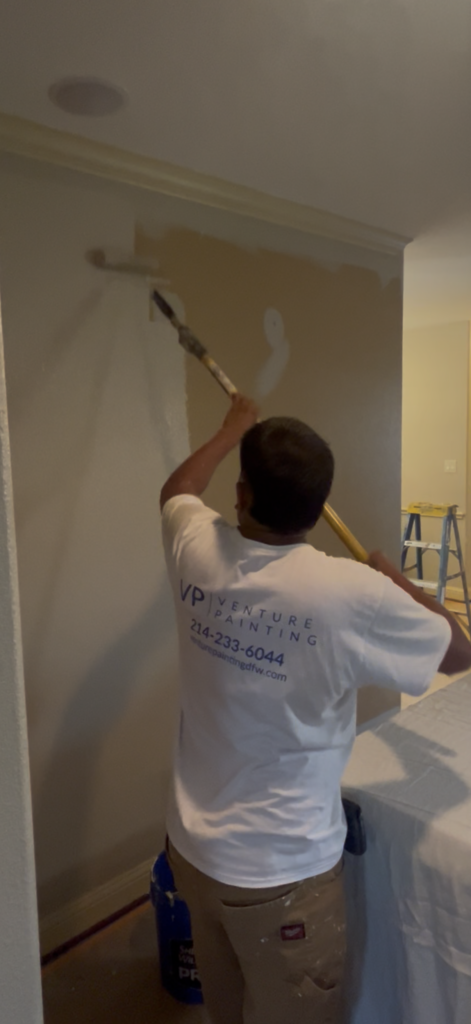
Color drenching, meaning taking the same color across the walls, trim, ceiling, and sometimes the door, has become popular for exactly this reason. Removing the contrast between white trim and colored walls eliminates the visual breaks that make a small room feel chopped up. It also solves the cold ceiling problem in one move, since the ceiling is no longer a bright cool plane hovering above a warm room. Different sheens on different surfaces keep the effect from going flat, with a matte on walls and ceiling and a satin on trim and doors. The technique requires careful cutting and a steady hand, because there are no crisp color breaks to hide a wandering line. It also demands quality product and full coverage, since deep bases show lap marks and thin spots more readily than pale colors. This is a project where preparation and technique determine the outcome far more than the color name on the can.
Saturated colors carry practical requirements that pale neutrals do not. Deep bases contain more colorant and less titanium dioxide, which means less hiding power and often a need for three coats over a light existing wall. A tinted primer matched toward the finish color solves this and can save an entire coat of expensive paint. Sanding and patching must be flawless first, because a matte deep color reveals every ridge and shadow across a wall in raking light. Cure time also matters, since latex paint dries to the touch within hours but continues hardening for two to four weeks depending on humidity and temperature. Furniture pushed against a freshly painted deep wall too soon can leave marks that do not buff out. Planning the work several weeks ahead of a holiday visit gives the finish time to reach full durability before the room gets used.
Ceiling, Trim, And Sheen Choices That Fix A Cold Guest Room
The ceiling is the largest uninterrupted surface in most guest rooms and it is almost always ignored during a repaint. A bright cool white ceiling sits directly in your field of view when you lie in bed, and it reflects cool light down onto everything beneath it. Switching that ceiling to a warm white, or to a color mixed at roughly twenty five to fifty percent of the wall color, softens the entire room immediately. This is one of the least expensive adjustments available and one of the most noticeable once it is done. Flat is still the correct sheen for a ceiling in nearly every case, since any reflectivity up there magnifies drywall seams and texture inconsistencies. A ceiling in good condition takes paint quickly and does not add much to a project timeline. The improvement to how the room feels at night is out of proportion to the effort involved.
Trim color quietly controls how warm or cool the walls read, and mismatched bases here undo good wall color choices. A blue based bright white baseboard next to a warm cream wall will make the wall look dingy rather than warm. Choosing a trim white that shares the same undertone family as the wall keeps everything looking deliberate. Some homeowners go further and use a slightly deeper version of the wall color on trim for a subtle, layered effect that suits guest rooms well. Doors should be included in this decision, since a door is a large vertical surface that sits at eye level. Semigloss on trim and doors provides durability and easy cleaning in a room where luggage gets dragged through the doorway. Small details like consistent caulk lines and crisp edges are what separate professional work from a weekend attempt.
Lighting and paint have to be selected as a system, because one can neutralize the other completely. Warm paint under 5000 Kelvin daylight bulbs will look strange every evening, and a beautiful color choice gets blamed for a bulb problem. Bulbs in the 2700 to 3000 Kelvin range render warm colors accurately and support the mood the paint is meant to create. Color Rendering Index also matters, and bulbs rated ninety or above show colors closer to how they appear in natural daylight. Adding a lamp on the nightstand gives guests a light source at bed level rather than a single glaring fixture overhead. Layered light in a warm room is what makes a guest feel settled instead of processed. Getting all of this coordinated is exactly the kind of detail a professional crew handles as part of the conversation rather than as an afterthought.
Why You Need A Guest Room Painting Plan Before Holiday Season
Fall is the busiest interior painting season in North Texas for a straightforward reason. Homeowners across Plano, Richardson, Allen, and the surrounding communities all decide within the same few weeks that the guest room needs attention before company arrives. Calendars fill quickly through October and November, and the last two weeks before Thanksgiving are typically booked solid. Planning the project now gives you time for proper color testing, full prep, and adequate cure time instead of a rushed job with wet trim on arrival day. A guest room is a small space, so the work itself is usually short, but the scheduling window is not. Getting on the calendar early is the difference between a finished room and a good intention.
Why You Need To Start Guest Room Painting Before Holiday Season
Interior painting is far less weather dependent than exterior work, but cooler months still bring conditions worth planning around. Most interior latex products want a surface and air temperature above fifty degrees for proper film formation, which is easy to maintain indoors. Humidity affects dry time between coats, and a poorly ventilated room in a damp week takes longer to reach recoat. Cracking a window and running a fan speeds the process and helps clear odor before guests use the space. These are simple adjustments, but they take time that a last minute project does not have. Building in a buffer of a couple weeks removes all of that pressure.
Starting early also gives you room to make a good color decision instead of a fast one. Sample boards need to be viewed across several days in different light before you commit to covering four walls. Rushing that step is how homeowners end up repainting the same room twice in one season. A two week testing window costs nothing and eliminates most of the risk. It also allows time to order bedding, a rug, or a lamp that works with the color you picked. The room comes together as a whole rather than as a wall color surrounded by whatever was already there.
Early scheduling protects your household routine as well. A guest room repaint typically takes one to two days on site, but that assumes access, cleared furniture, and no surprise repairs behind the dresser. Discovering water staining or damaged drywall on the morning of the job forces either a delay or a compromise. Booking with time to spare means a repair can be handled properly and the finish coat can still go on well ahead of arrival. Serving the Plano area and nearby communities, we plan projects around your calendar rather than the other way around. Click here for our Richardson painting services if you are just outside Plano and want the same scheduling flexibility.
Why You Need Full Prep For Guest Room Painting Before Holiday Season
Prep work is where a paint job either earns its lifespan or loses it, and it is the step most often shortened to save time. Walls need to be cleaned, holes filled, seams addressed, and any glossy surfaces scuffed so the new coating can bond. Nail pops in guest rooms are common because the room sees seasonal temperature swings from a closed vent and an exterior wall. Caulking gaps at trim and baseboard sharpens the finished look and reduces drafts along the floor line. Skipping these steps produces a room that looks acceptable on day one and shows every flaw by spring. Detailed prep is the reason a properly done interior repaint holds up for many years.
Priming matters more than most homeowners expect, especially when changing color direction significantly. Going from a cool gray to a warm cream, or from a pale neutral to a deep saturated tone, benefits from a tinted primer that reduces the number of finish coats needed. Primer also seals patched areas so those spots do not flash differently in sheen once the wall dries. Stains from water, smoke, or marker require a stain blocking product rather than another coat of wall paint. Getting this right the first time avoids the frustration of a repair that keeps reappearing through the finish. A crew that knows which product to reach for saves both time and material.
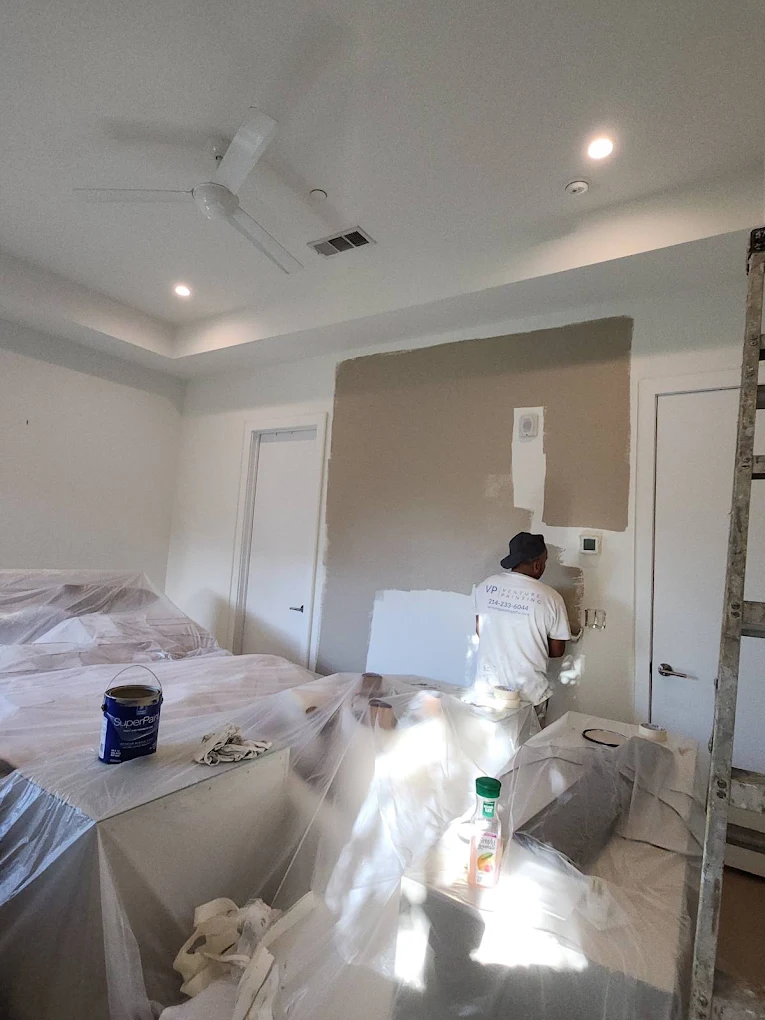
Protection of the space is the other half of good prep and it directly affects your experience during the project. Floors get covered, furniture gets moved and wrapped, and fixtures get masked before any paint opens. Clean edges at the ceiling, the trim, and any accent wall lines are produced by careful cutting rather than by tape alone. Daily cleanup keeps the rest of your house usable while the work is underway. Our crews leave the room ready for furniture and bedding rather than leaving you with a second project. Respect for your home is a standard, not an upgrade.
Why You Need Venture Painting For Guest Room Painting Before Holiday Season
Venture Painting is based right here at 2113 Northcrest Dr in Plano, and we work in these neighborhoods every week. We specialize in interior and exterior painting, which means guest rooms, hallways, ceilings, trim, and full interior repaints are core work for us rather than a side offering. Our estimates are free, and the pricing we give you is clear and honest with no vague line items or surprise additions at the end. We walk the room with you, talk through undertones and sheen, and give you a straight answer about what will actually solve the problem. Detailed prep is included in how we work, not sold as an extra.
Our crews show up clean, organized, and respectful of the fact that they are working inside your home. Furniture gets protected, floors get covered, and the room gets left tidy at the end of every day. We keep communication simple and direct so you always know what is happening and when the work will be finished. Homeowners across Plano and the surrounding high value communities have trusted us with interiors, exteriors, cabinets, and fences for exactly that reason. A guest room is a small project, and we treat it with the same care we bring to a whole house repaint.
Getting a guest room right before the holidays is one of the easiest wins available in a home, and it pays off every time someone stays with you. The color choice, the ceiling, the trim, and the prep all work together to turn a cold spare room into a space people are glad to sleep in. We can walk your room, test colors with you, and have the work finished well ahead of your first arrival. Call Venture Painting at (214) 233-6044 or email zeb@venturepaintingdfw.com to schedule a free estimate. Want the full breakdown of what an interior repaint includes? Click here for our interior painting service.