
Why Professional Prep Work Is the Real Reason Pro Paint Lasts Longer
A fresh coat of paint can transform any room or exterior, but the finish you see on day one is not what determines how long that color stays beautiful. The real work happens before the first drop of paint ever touches the wall. Professional prep work is the quiet, unglamorous stage that decides if your paint job lasts three years or fifteen. Many homeowners focus on paint brand and color, yet the surface underneath matters far more than the can sitting on the shelf. Clean, sound, and properly primed surfaces give paint something reliable to grip, and that grip is what fights peeling, cracking, and fading. When prep is rushed or skipped, even premium paint fails early and the cost of repainting arrives much sooner than it should. Skilled crews understand that good preparation protects both the look of your home and the money you invested in it. This guide explains what professional prep work involves and why it is the true reason a professional paint job outlasts a quick weekend project.
What Professional Paint Prep Work Actually Involves
Professional paint prep work is the full set of steps a crew completes to make a surface ready for a durable finish. It covers far more than wiping down a wall or laying out a drop cloth. A complete prep process includes cleaning, scraping, sanding, repairing, caulking, and priming, and each step builds on the one before it. Skip any single stage and the entire system weakens, because paint can only perform as well as the surface beneath it. The goal is simple: create a clean, smooth, stable, and dry foundation that paint can bond to for years. Different surfaces call for different methods, so a crew adjusts the plan for wood, drywall, masonry, or previously painted areas. Time spent on this stage is never wasted; it is the difference between a finish that holds and one that fails. Understanding the three core stages of cleaning, repair, and priming shows why professional prep work carries so much weight.
The Cleaning Step in Professional Paint Prep Work
Cleaning is the first stage of professional paint prep work, and it sets the tone for everything that follows. Walls and exterior surfaces collect dust, grease, pollen, cobwebs, and oils from daily life and the weather. Paint cannot bond to a dirty surface; it sits on top of the grime and lifts away as that layer breaks down. A crew removes loose debris, washes problem areas, and treats any spots where contamination is heavy. Kitchens and bathrooms often hide grease and soap film that block adhesion in ways the eye cannot always see. On exteriors, dirt and chalky residue from old paint must come off before any new coat goes on. Skipping this step is one of the most common reasons a fresh coat starts peeling within a year.
Mildew and mold deserve special attention during the cleaning stage of professional paint prep work. These growths thrive in shaded, damp areas like north facing walls, bathrooms, and shaded fences. Painting over mildew traps it, and the spores continue to grow underneath the new finish. The result is dark staining that bleeds through the paint and a coat that releases from the wall. A proper crew treats these areas so the surface is truly clean before priming begins. This care matters most in humid Texas summers, when warm, moist conditions encourage growth on outdoor surfaces. Removing biological contamination now prevents a stubborn, recurring problem later.
Rinsing and drying close out the cleaning stage, and patience here pays off in durability. Any cleaning product or water left behind can interfere with how paint sets and cures. A surface that looks dry on top can still hold moisture inside, especially after pressure washing an exterior. Crews allow proper drying time based on the material and the weather before moving forward. In the heat of a North Texas summer, exteriors can dry quickly, yet shaded and dense materials still need time. Rushing this step locks moisture under the paint, which leads to bubbling and early failure. Clean and dry surfaces give the next stages of prep the solid starting point they need.
The Repair Step in Professional Paint Prep Work
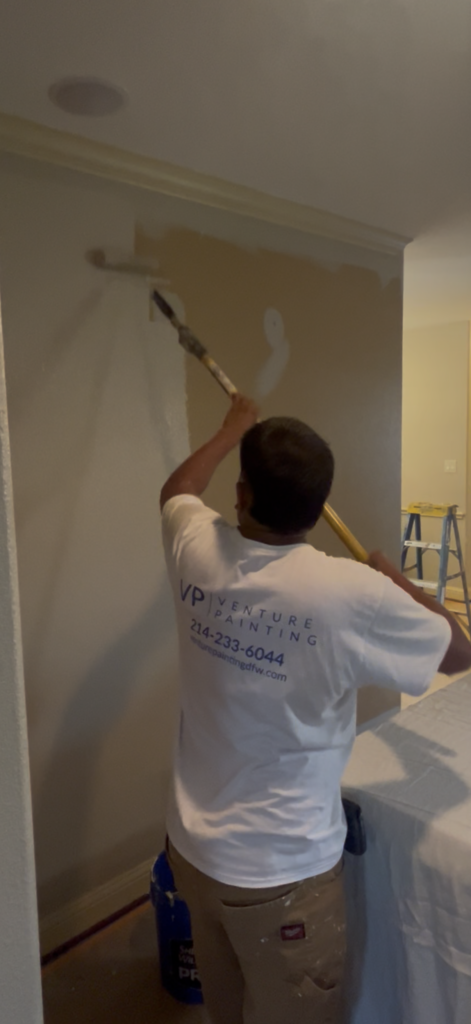
The repair step in professional paint prep work fixes the flaws that paint alone can never hide. Cracks, dents, nail holes, gouges, and worn caulk all show through a fresh coat if left alone. Glossy paint actually highlights surface damage rather than concealing it. A crew fills holes, patches damaged drywall, and smooths rough areas so the wall reads as one even plane. On trim and siding, damaged wood is repaired or replaced before any paint is applied. This stage turns a tired, marked up surface into a clean canvas ready for color. Good repair work is invisible when finished, and that is exactly the point.
Scraping and sanding are central to the repair step in professional paint prep work. Old paint that is peeling, blistering, or flaking must come off, because new paint cannot stick to a failing layer. A crew scrapes loose material back to a sound edge, then sands the area to feather the transition. Sanding also dulls glossy surfaces so the next coat has texture to grab onto. Bare wood gets sanded smooth to open the grain and improve adhesion. This is detailed, time consuming labor, and it is one of the clearest markers of a professional approach. Cutting corners here leaves ridges, lap marks, and weak spots that surface within months. Careful scraping and sanding create the smooth, stable base that long lasting paint requires.
Caulking and sealing finish the repair step in professional paint prep work. Gaps around trim, windows, doors, and joints let in air, water, and pests when they are left open. Fresh, flexible caulk seals these gaps and gives the finish a crisp, continuous line. On exteriors, sealing keeps moisture out of the wall assembly, which protects both the paint and the structure. Old, cracked caulk is removed first, since new caulk over failing caulk will not hold. This attention to detail is part of why a professional finish looks tight and clean up close. Proper drywall and surface repair is a craft of its own; if your walls need patching before paint, click here for our drywall repair service.
The Priming Step in Professional Paint Prep Work
The priming step in professional paint prep work creates the bonding layer between the surface and the finish coat. Primer is not the same as paint; it is engineered to grip the surface and give topcoats something to hold. Bare wood, fresh drywall, patched areas, and stained spots all need primer before color goes on. Without it, paint soaks in unevenly, looks blotchy, and loses adhesion over time. Primer also blocks stains from bleeding through, including water marks, smoke, and tannins from wood. A crew selects the right primer for each surface, because masonry, metal, and wood all behave differently. This step is easy to skip and impossible to fake, which is why it separates lasting work from quick jobs.
Spot priming and full priming both have a place in the priming step of professional paint prep work. Small repairs and bare patches often need only spot priming to seal those specific areas. Major color changes, heavily stained walls, or bare surfaces usually call for a full prime coat. A crew reads the surface and chooses the level of priming the job actually needs. Over priming wastes time and material, while under priming invites early failure. The right balance comes from experience and an honest read of the conditions. This judgment is one of the quiet skills a seasoned crew brings to every project.
Primer also improves how the finish coat looks during the priming step of professional paint prep work. A uniform primed surface helps the topcoat dry to an even sheen and a consistent color. Dark colors and bold tones often cover better and need fewer coats over a tinted primer. This saves paint, saves labor, and produces a richer, more even result. The finish simply looks better and holds that look far longer. Quality interior results start with this kind of careful priming, and our crews treat it as standard practice. To see how thorough prep shapes a finished room, click here for our interior painting service.
How Professional Prep Work Makes Pro Paint Last Longer
Professional prep work makes pro paint last longer by solving the exact problems that cause paint to fail. Paint failure almost always traces back to the surface, not the can. Peeling, cracking, blistering, and fading start when paint cannot bond, cannot stay dry, or cannot sit on a stable base. Each stage of prep targets one of these failure points directly. Cleaning and repair give paint a sound surface, and priming gives it a reliable grip. Together these steps extend the life of a paint job by years, not months. The science is straightforward, and it explains the gap between a professional finish and a rushed one. Three factors carry most of the weight: adhesion, moisture control, and proper primer.
How Surface Adhesion Makes Pro Paint Last Longer
Surface adhesion is the foundation of how professional prep work makes pro paint last longer. Adhesion is the bond between the paint film and the surface beneath it. Strong adhesion keeps paint locked in place through heat, cold, sun, and daily wear. Weak adhesion lets paint peel, flake, and lift at the edges. Clean, sanded, and primed surfaces give paint the mechanical and chemical grip it needs. A glossy or dirty surface offers almost nothing for paint to hold, so the bond fails early. This is why crews spend so much effort dulling, cleaning, and priming before they open a can of color.
Temperature swings test adhesion constantly, which is part of how professional prep work makes pro paint last longer. Surfaces expand in heat and contract in cold, and paint must flex with them. A well bonded film moves with the surface and stays intact through these cycles. A poorly bonded film cracks and separates as the surface shifts beneath it. North Texas summers bring intense heat and strong sun that punish exterior paint daily. Paint that was applied over a properly prepped surface handles that stress far better. The bond formed during prep is what carries the finish through years of seasonal change.
Adhesion also protects the appearance of the finish, another way professional prep work makes pro paint last longer. When paint stays bonded, the color stays even and the surface stays smooth. There are no peeling edges, no flaking patches, and no bare spots showing through. The wall or exterior looks freshly painted for years instead of months. This is the difference homeowners notice when they compare professional work to a quick repaint. Strong adhesion is not luck; it is the direct result of disciplined prep. Every clean, sand, and prime step is an investment in a bond that holds.
How Moisture Control Makes Pro Paint Last Longer
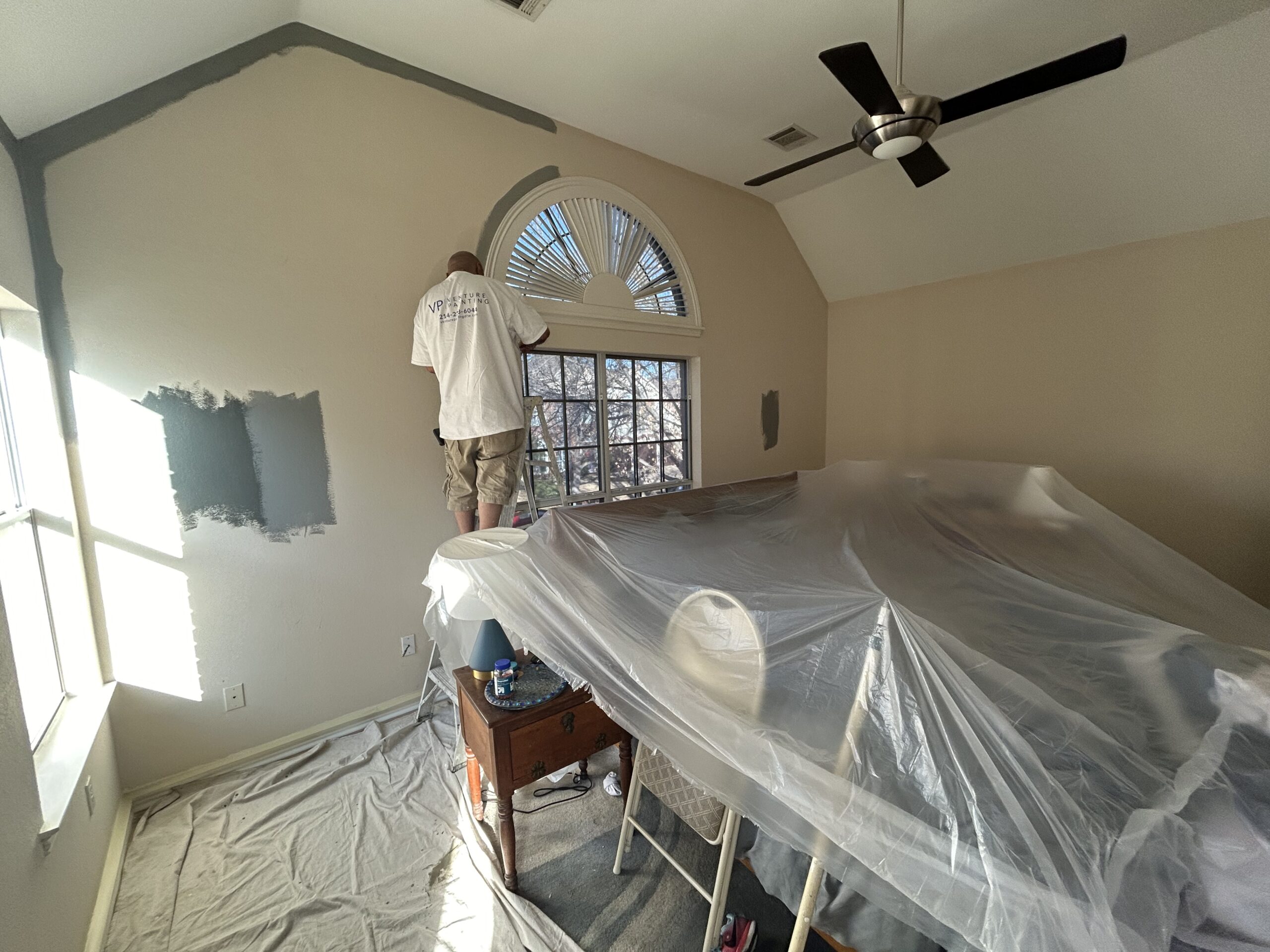
Moisture control is one of the most important ways professional prep work makes pro paint last longer. Water is the enemy of nearly every paint film, inside and outside the home. Moisture trapped under paint pushes it off the surface, creating bubbles, blisters, and peeling. Proper prep keeps water out and lets trapped moisture escape before paint is applied. Crews allow surfaces to dry fully and seal gaps where water could enter. On exteriors, this means addressing damp areas before priming and painting. Controlling moisture at the prep stage prevents the most common form of early paint failure.
Humidity and weather timing shape how moisture control makes pro paint last longer. Painting a damp surface or working in poor conditions locks moisture into the system. A professional crew watches the weather and the surface, then paints when conditions allow a clean cure. Texas summers can bring high humidity along with the heat, and that combination affects drying. Experienced crews plan exterior work around these conditions to protect the finish. This timing is part of the craft that homeowners rarely see but always benefit from. Smart scheduling at the prep stage pays off in a finish that cures correctly and lasts.
Sealing and caulking support moisture control and show how professional prep work makes pro paint last longer. Open gaps around windows, doors, and trim are entry points for water. Once water gets behind the paint, it works to push the film off from the inside. Fresh caulk closes those gaps and keeps the wall assembly dry. This protects the paint and the structure underneath it at the same time. Exterior surfaces face the most weather, so this sealing work matters most outdoors. Our exterior painting service treats moisture control as a core part of every project.
How Proper Primer Makes Pro Paint Last Longer
Proper primer is a key reason professional prep work makes pro paint last longer. Primer creates a stable, uniform base that the finish coat can bond to evenly. It seals porous surfaces so paint does not soak in and fail in patches. It also locks down stains and old residue that would otherwise bleed through. The result is a finish that adheres better, covers better, and ages slower. Each surface needs the right primer, and matching them is part of the skill. This single step quietly extends the life of the entire paint job.
Primer fights stains and bleed through, which is part of how proper primer makes pro paint last longer. Water stains, smoke damage, and wood tannins can travel up through paint over time. The finish looks clean at first, then yellow or brown spots appear weeks later. A stain blocking primer seals these problems so they never reach the surface. This keeps the color true and the finish clean for the long run. Crews choose stain blocking primers when the surface history calls for it. That foresight prevents a frustrating problem that is hard to fix after the fact.
Primer also improves coverage and color depth, another way proper primer makes pro paint last longer. A primed surface lets the topcoat spread evenly and reach full color faster. Fewer coats are often needed, which protects the finish from buildup and waste. Tinted primers help bold and dark colors look rich and consistent. The finish coat does its job better when it sits on the right primer. This is why professionals prime first and never treat it as an optional step. Good primer is invisible in the end, yet it carries the whole finish for years.
Why You Need a Professional Painting Crew for Prep Work That Lasts
Prep work is labor heavy, detailed, and easy to underestimate, which is why a professional crew makes such a difference. The steps look simple from the outside, yet each one requires the right tools, products, and judgment. A skilled team knows how to read a surface, choose the correct approach, and complete each stage in order. This expertise is the difference between paint that lasts a few seasons and paint that lasts many years. Hiring professionals protects your time, your home, and the money you put into the project. The sections below explain why skilled prep work is worth it and why Venture Painting is the right team for the job.
Why Skilled Prep Work Protects Your Home Investment
Skilled prep work protects your home investment by extending the life of every paint job you pay for. Repainting is one of the more frequent costs of owning a home, and prep determines how often you face it. A properly prepped finish can last well over a decade, while a rushed one may fail in a year or two. That difference adds up to real savings across the life of your home. Quality prep turns paint from a quick fix into a lasting upgrade.
Skilled prep work protects your home investment by guarding the surfaces underneath the paint. Paint is more than color; it is a protective shield against moisture, sun, and wear. When prep seals and protects properly, the wood, drywall, and siding underneath stay sound. When prep is skipped, water and weather reach those surfaces and cause damage that costs far more to repair. Good prep work defends your home, not just its appearance. That protection is one of the strongest reasons to take preparation seriously.
Skilled prep work protects your home investment by raising the value and curb appeal of your property. A clean, well maintained finish signals a home that has been cared for. Buyers and neighbors notice the difference between a sharp finish and a peeling one. Strong prep keeps that finish looking new for years, which supports your home value. The money you spend on quality prep returns to you in protection and appearance.
Why Free Estimates Make Professional Prep Work Easy to Start
Free estimates make professional prep work easy to start because they remove the guesswork before you commit. A clear estimate shows you the scope, the steps, and the honest cost of the project. You learn exactly what prep your surfaces need before any work begins. There are no surprises and no vague pricing to decode later. This clarity helps you plan your project with confidence.
Free estimates make professional prep work easy to start because they open an honest conversation. A crew can walk your space, point out problem areas, and explain the prep each surface requires. You can ask questions about adhesion, moisture, repairs, and timing. This is the moment to understand the work, not after the bill arrives. Clear, honest pricing is a core promise of how we do business. That openness builds the trust every painting project should start with.
Free estimates make professional prep work easy to start because they fit the project to your goals. Every home is different, and every surface tells its own story. An estimate lets us match the right prep and finish to your needs and budget. You stay in control of the plan from the very first visit. Starting with a free estimate is the simplest first step toward a finish that lasts.
Why Choose Venture Painting for Prep Work That Lasts
Homeowners choose Venture Painting for prep work that lasts because we treat preparation as the heart of every project. Our crews complete detailed prep work for long lasting results on every job we take. We clean, repair, sand, seal, and prime with the care a durable finish demands. We serve Plano and nearby high value communities with the same standard every time. Our team is clean, organized, and respectful of your home from start to finish.
Homeowners choose Venture Painting for prep work that lasts because we are honest and easy to work with. We offer free estimates with clear, honest pricing so you always know what to expect. We are interior and exterior painting specialists who understand North Texas conditions. Our friendly, professional team earns trust through quality work and straight talk. We show up on time, communicate clearly, and treat your project like it matters.
Homeowners choose Venture Painting for prep work that lasts because we stand behind the finish we deliver. Strong prep is the real reason professional paint lasts longer, and it is the standard we hold on every project. Ready to protect your home with a finish built to last? Reach out today for your free estimate. Call Venture Painting at (214) 233-6044 and let our team show you what proper prep work can do. We are proud to serve Plano and the surrounding communities with painting that holds up for years.