

The Last Warm Weekends: What Happens When Exterior Paint Goes On Too Late In The Year
Every fall in North Texas, homeowners look at a stretch of pleasant weather and decide the house can still get painted before winter. The idea makes sense on the surface, because a seventy degree Saturday in October feels like ideal working weather, and it often is. The problem is that exterior paint does not cure on a weekend schedule; it cures over days, and it cares far more about what happens at three in the morning than what happens at noon. When coatings go on too late in the season, the failures do not show up right away, which is exactly what makes them so expensive. A wall can look flawless in November and start peeling in March. This guide explains what actually goes wrong when exterior paint is applied past its window, how to recognize the damage, and how to use the last genuinely warm weekends of the year without gambling on a repaint. Venture Painting works across Plano, Allen, Richardson, and the surrounding communities, and we plan fall projects around the forecast rather than around wishful thinking.
Why Exterior Paint Fails When It Goes On Too Late In The Year
Exterior coatings are chemistry, not just color, and that chemistry runs on temperature, moisture, and time. Modern acrylic latex paint dries in two separate stages that people often confuse with each other. The first stage is evaporation, where water leaves the film and the surface feels dry to the touch, sometimes in as little as an hour. The second stage is coalescence, where the acrylic resin particles soften, flow together, and lock into one continuous membrane that can flex with the siding and shed water. Coalescence is the stage that gives you a durable finish, and it is the stage that cold weather quietly destroys. A film that skips proper coalescence looks finished but behaves like a dusting of loose particles sitting on your siding. That is the core reason paint applied too late in the year fails, and every symptom below traces back to it.
Cold Nights And Exterior Paint That Goes On Too Late In The Year
Most standard exterior acrylic products require air and surface temperatures at or above fifty degrees Fahrenheit during application and for a sustained period afterward. Low temperature formulations exist and can be applied down to roughly thirty five degrees, but they carry the same catch, because the temperature has to stay above that minimum continuously while the film forms. Manufacturers typically call for that window to hold for twenty four to forty eight hours after the last coat goes on. In North Texas, a beautiful October afternoon in the mid seventies can be followed by an overnight low in the low forties, and by mid November those lows can slip into the thirties without much warning. The paint that felt dry at four in the afternoon is still forming its film at two in the morning, and that is when the damage happens. Cold stops the resin particles from flowing together, and once that process stalls it does not restart when the sun comes up the next day. You end up with a permanently weak film that never reaches the durability printed on the label.
Surface temperature is the number that matters most, and it is almost never the same as the number on your phone. Masonry, brick, and stucco hold cold long after the air has warmed, so a north facing wall in Plano can easily sit ten to fifteen degrees below the reported air temperature at ten in the morning. South and west facing elevations warm quickly and can even get too hot in early fall, which creates a different problem with paint skinning over before it levels out. A professional crew checks surface temperature with an infrared thermometer rather than guessing, and sequences the elevations so each wall gets painted when it is actually in range. Shaded areas under deep eaves, behind mature trees, and along the north side of a two story home may never reach the minimum at all during a short November day. Those are the sections that peel first, and homeowners are often puzzled because the rest of the house looks fine. The paint did not fail randomly; it failed exactly where the wall stayed cold.
Daylight hours compress the working window in a way that catches people off guard. In late September a crew might have ten productive hours of usable surface temperature, and by the middle of November that same crew might have five or six. Painting has to stop well before sunset so the film has time to set up before evening moisture arrives, and that cutoff moves earlier every week through the fall. A project that would take three days in September can stretch to five or six days in late November, which means more nights of exposure for every coat applied. Crews that ignore the shrinking window and keep spraying until dusk are the ones who generate callbacks in the spring. Scheduling the job earlier is not an upsell tactic; it is the only reliable way to give the coating the hours it needs. If you are weighing a fall exterior project, our team can walk your home and give you an honest read on the calendar. Ready to get on the schedule while the weather still cooperates? Click here for our exterior painting service.
Dew, Humidity, And Exterior Paint Applied Too Late In The Year
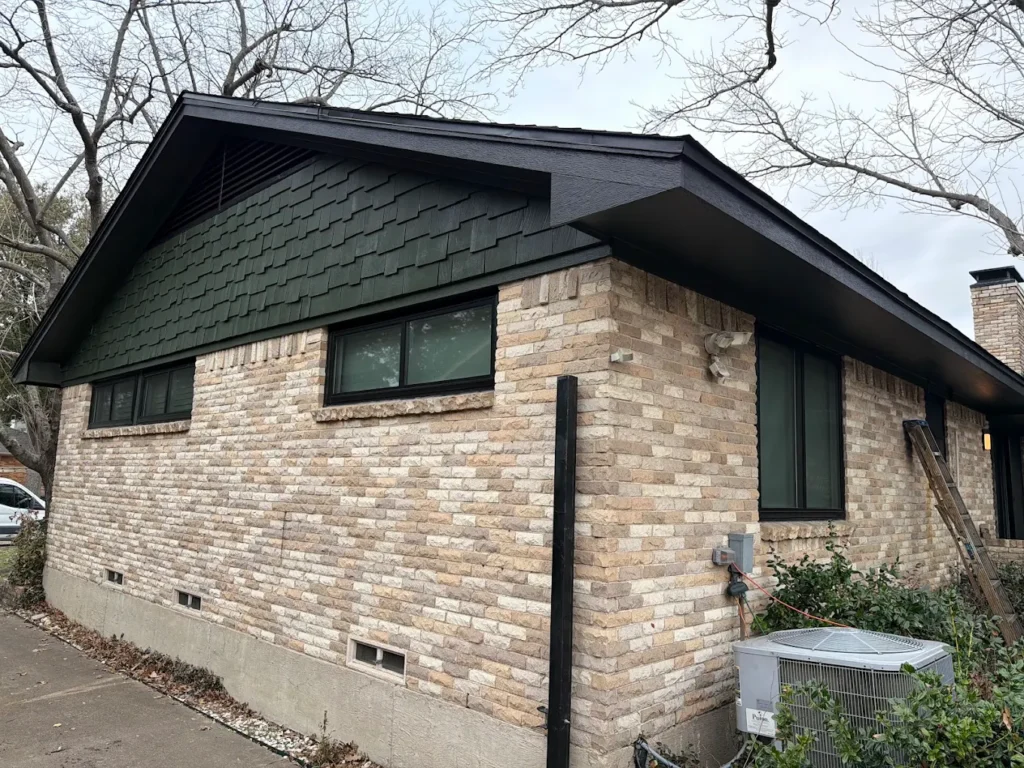
Dew is the most underestimated threat to fall exterior painting, and North Texas gets plenty of it once nights start cooling. Dew forms when a surface drops to the dew point temperature, and in autumn that often happens a couple of hours before sunset rather than after midnight. The industry standard is to keep the surface at least five degrees above the dew point during application, because anything closer risks moisture condensing into the wet film. When dew settles on paint that has not fully coalesced, water gets pulled back into the coating and interrupts the entire process. Morning moisture then has to burn off before work can resume, which frequently pushes the start time to ten or eleven o’clock. That combination of a late start and an early stop is what turns a three day job into a week long job in November.
Surfactant leaching is the most visible consequence of painting into damp fall conditions, and it confuses a lot of homeowners. Acrylic paints contain water soluble additives that help the product flow, resist freezing in the can, and stay stable on the shelf. Under normal drying conditions those additives get locked harmlessly inside the film, but slow cool drying gives them time to migrate to the surface instead. Dew or light rain then pulls them into visible tan, brown, or glossy streaks that run down the wall like sap. Dark colors such as deep charcoal, navy, hunter green, and black show it most dramatically, and those happen to be popular choices for front doors, shutters, and modern exterior schemes. The streaking is usually washable on the first occurrence, though it can return repeatedly for months and sometimes stains permanently. Prevention comes down to timing, not product selection, because even premium paint leaches when it dries too slowly.
Trapped moisture underneath the coating causes slower and more serious problems. Wood siding, fascia boards, window trim, and fence pickets absorb humidity, and fall rain in the Dallas area can leave substrates wet well below the surface. Wood should generally be below fifteen percent moisture content before coating, and a rain event can push it far above that for several days depending on temperature and airflow. Sealing damp wood traps that water against the substrate, where it expands and contracts with the seasons and pushes the paint film off from behind. The result is blistering and peeling that looks like adhesion failure but is really a moisture problem created at application. Pressure washing late in the year makes this worse when crews do not allow adequate dry time, since cool air dries siding much more slowly than August heat. A proper fall project builds real drying days into the schedule, and that requires starting before the calendar runs out.
Adhesion Problems From Exterior Paint Applied Too Late In The Year
Adhesion is the bond between the coating and everything beneath it, and cold weather weakens every layer of that stack. Primers rely on the same coalescence or curing chemistry as topcoats, so a primer applied in marginal conditions creates a compromised foundation before the color ever goes on. Caulk has its own temperature requirements, and most siliconized acrylic latex sealants call for application above forty degrees with a cure period measured in days. Cold cured caulk stays soft, shrinks unevenly, and pulls away from joints during the first hard freeze, which opens gaps at trim, corners, and window perimeters. Water finds those gaps immediately, and once it gets behind the paint the repair is no longer cosmetic. A house painted in December often shows its first failures at the joints rather than in the field of the wall.
Recoat windows stretch dramatically in cool weather, and rushing them is one of the most common shortcuts on late season projects. A product that allows recoating in four hours at seventy seven degrees might require twelve hours or more at fifty degrees, and some manufacturers advise waiting a full day. Applying a second coat over a first coat that has not released its water traps moisture between the layers permanently. That sandwiched moisture creates soft spots, blistering, and a film that never reaches full hardness even after the weather warms. Crews working against the sunset are tempted to double coat in a single day so they can finish before the next cold front arrives. The house looks complete on Friday, and the failure surfaces the following spring when temperature swings start flexing the siding. Reading the technical data sheet for the actual conditions on site is what separates a lasting job from a seasonal gamble.
Block resistance is the last piece, and it explains why doors and windows cause so much trouble on late season projects. Blocking is the tendency of two painted surfaces to stick together when pressed against each other, and full block resistance develops only after the film fully cures. In warm weather that might take a week, while in cool damp fall conditions it can take three weeks or longer. Homeowners close a freshly painted front door on a cold night, and by morning the weatherstripping has fused to the paint or the slab has bonded to the jamb. Opening it tears the film right off the edge and often takes primer with it, which means sanding, spot priming, and recoating a door that was supposed to be finished. The same issue affects window sashes, shutters, garage door panels, and gates. Proper fall work accounts for cure time and gives you clear instructions on what to leave alone and for how long.
Signs Your Exterior Paint Went On Too Late In The Year
Late season paint failure rarely announces itself in the first month, which is why so many homeowners believe the job went well until spring arrives. The coating looks correct because color, sheen, and coverage are all determined at application rather than during cure. What is missing is the internal strength of the film, and that only gets tested once the weather starts moving. North Texas is brutal in this respect, because we swing from freezing mornings to seventy degree afternoons within the same week, and that constant expansion and contraction works on every weak spot. Substrates move, films that never coalesced cannot flex with them, and the failures start showing up in a predictable order. Knowing what to look for lets you catch problems while they are still repairable instead of after water has gotten behind the siding. Below are the three patterns we see most often on homes that were painted past the window.
Cracking And Peeling From Exterior Paint Applied Too Late In The Year
Early failure in an undercured film usually begins as fine surface cracking that most people never notice from the driveway. Look closely at horizontal surfaces first, since window sills, handrails, deck caps, and the tops of fascia boards hold water longer than vertical walls. A properly coalesced acrylic film stretches and returns as the substrate moves through daily temperature swings, but a weak film simply splits. Those hairline cracks widen over a few months and eventually connect into the alligatored pattern that signals a coating at the end of its life. In a normal repaint that pattern shows up after ten or fifteen years, while paint applied in the wrong conditions can get there in one or two. The speed of the failure is the clearest evidence that timing was the cause rather than product quality. If your siding cracked within a year of painting, application conditions are the first thing to investigate.
Peeling that starts at edges and penetrations tells a similar story. Water enters at the weakest point in the system, and on most homes that means nail heads, board ends, butt joints, corner boards, and the seams where trim meets siding. Once moisture gets behind a coating that never bonded properly, freeze cycles do the rest by expanding and lifting the film away from the substrate. The peeling paint usually comes off in sheets rather than flakes, and the back of each sheet often carries a thin layer of primer or wood fiber with it. That clean release is the signature of an adhesion failure rather than normal wear, since a well bonded film breaks apart instead of lifting cleanly. Homeowners frequently blame the paint brand when they see this, though the same product performs for a decade on the neighbor’s house painted in May. The variable was the weather at application, not the can.
Repairing this kind of failure is more involved than most people expect, and that is the real cost of a late season shortcut. Every loose area has to be scraped back to a sound edge, feathered smooth, and spot primed with a product that bonds to both the bare substrate and the surrounding coating. Any surrounding paint that is questionable has to come off too, because leaving it means the repair fails at the boundary within a season. On homes with wood siding the failed sections may reveal rot or moisture damage that developed while water sat behind the film. Drywall, trim, and siding repairs often become part of the project once the extent of the damage is visible. This is why we handle surface repair as part of the painting scope rather than treating it as a separate trade. Dealing with damaged walls or trim before you paint? Click here for our drywall repair service.
Streaking And Color Shift In Exterior Paint Applied Too Late In The Year
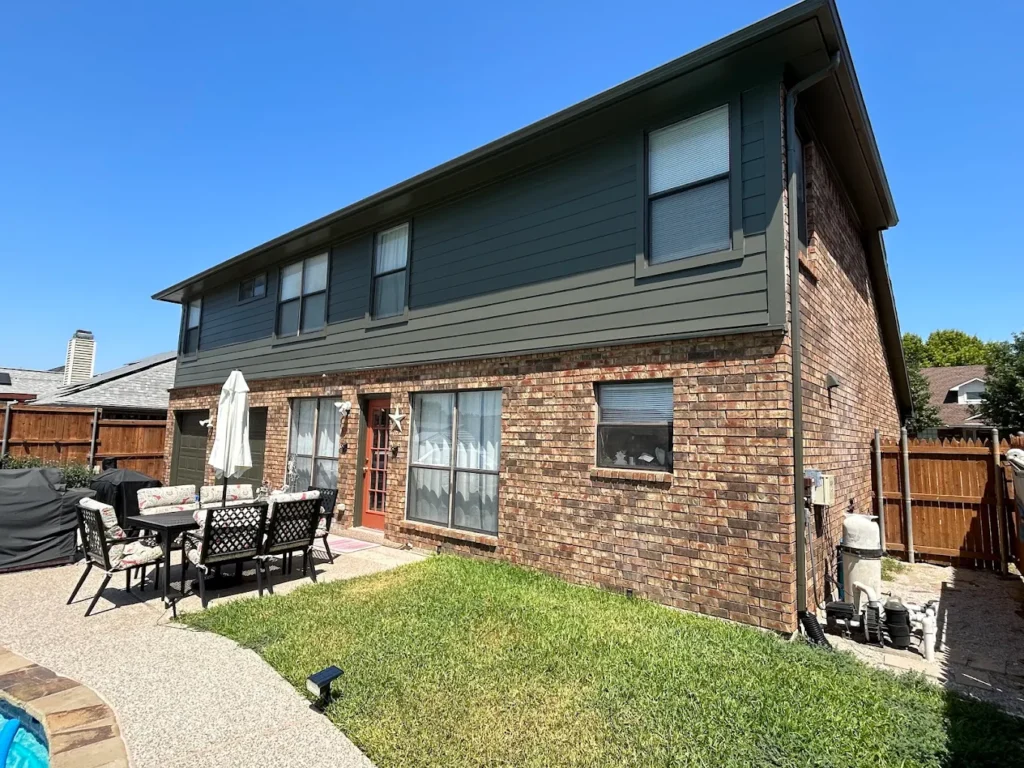
Streaking on a freshly painted house almost always traces back to surfactant leaching, and fall conditions are the primary trigger. The streaks appear as tan, amber, or glossy runs that start beneath windows, along soffit lines, and under any horizontal edge that sheds water. They tend to show up after the first heavy dew or light rain following application, sometimes within a week of the crew leaving. Washing usually removes the visible residue, and a mild soap solution with a soft brush handles most of it without damaging the film. The frustrating part is that leaching often recurs after each moisture event for two or three months while the additives continue working their way out. On very dark colors the residue can etch a faint permanent shadow into the sheen even after the streaks are gone. None of this happens on the same house painted in April, which is the clearest argument for respecting the season.
Uneven sheen across a wall is a related symptom and usually appears when different sections cured at different rates. Paint that dries slowly in shade develops a slightly different surface texture than paint that dried quickly in direct sun, and light reveals the difference at certain angles. A wall might look uniform at noon and show obvious banding at five in the afternoon when the sun comes in low. Late season projects amplify this because the temperature gap between a sunny elevation and a shaded one can be twenty degrees or more within the same hour. Crews that spray a full elevation in one pass and then move on rarely notice the problem while they are on site. The homeowner sees it a week later when the light changes, and by then correcting it usually requires recoating the entire elevation. Sequencing the work around sun exposure prevents the issue entirely and costs nothing but planning.
Color inconsistency between batches becomes harder to manage on stretched out fall projects. Paint is mixed in batches, and while modern tinting is extremely accurate, slight variation between batches is normal and expected. Standard practice is to box the paint, meaning several containers get combined into one larger vessel so any variation gets averaged across the whole job. When a project drags on for two weeks because of weather delays, additional material often gets picked up mid job and applied without boxing. The difference may be invisible in the can and obvious on a large sunlit wall. Finishing an elevation with a single boxed supply is basic craftsmanship, and it gets skipped most often on jobs that are running behind. Keeping the schedule tight is one more reason to start before the weather starts dictating the pace.
Soft, Tacky Film From Exterior Paint Applied Too Late In The Year
A coating that still feels soft weeks after application is a clear sign that curing never completed. Press a fingernail gently into a painted trim board in an inconspicuous spot, and a properly cured film resists while an undercured one dents or marks. Tackiness is even more telling, since a finished exterior coating should feel completely dry and slick rather than slightly grabby. Oil based and alkyd products are especially prone to this in cold weather, because they cure through oxidation rather than evaporation and that reaction slows dramatically below fifty degrees. Alkyd enamel applied on a cold day can stay tacky for weeks and sometimes never hardens correctly at all. Since alkyds are still commonly used on doors, handrails, and metal, those are the components most likely to show the problem. The good news is that a soft film is easier to catch early than a hidden adhesion failure.
Dirt pickup is the practical consequence, and it shows up fast in a region with as much wind and dust as North Texas. A soft film acts like flypaper for pollen, dust, lawn clippings, and road grime, and the contamination embeds into the surface rather than sitting on top of it. Washing does not fully remove it because the particles are partially encapsulated in the coating. Within a season the house takes on a dingy cast that no amount of cleaning corrects, especially along the lower third of the walls where splashback is heaviest. Homeowners often assume the color was wrong or the sheen was too flat, when the actual issue is a film that stayed open too long. The comparison is obvious when a neighbor’s house painted the previous spring still cleans up like new.
Fences and stained wood deserve their own attention here, since penetrating stains behave differently from film forming paints. Stain has to soak into the wood fiber to protect it, and cold damp wood simply will not accept it at the intended rate. Applied too late in the year, stain sits on the surface, dries unevenly, and leaves blotchy dark areas where it pooled alongside light patches where it never penetrated. Fall is also when fence boards carry the most residual moisture from autumn rain, which blocks absorption even further. Getting the wood properly cleaned and fully dried before staining is not optional, and that dry time gets harder to find as the days shorten. A fence stained at the right moment in the season can look sharp for years, while one stained too late often needs redoing the next spring. Thinking about your fence before winter sets in? Click here for our fence staining service.
Why You Need An Exterior Painting Crew That Watches The Calendar
The difference between a fall exterior project that lasts a decade and one that fails by spring is rarely the paint, the sprayer, or the prep. It is the decision about which days to work and which days to wait. That decision requires reading forecasts several days out, checking surface temperatures instead of air temperatures, tracking dew point, and being willing to lose a day rather than push a coat onto a wall that is not ready. Contractors racing to close out the year have every incentive to keep working, and homeowners rarely know enough to question it. Venture Painting builds the season into the estimate from the beginning, so you understand what is realistic before anyone picks up a brush. When the window closes, we say so and help you plan the right work for the months ahead.
How We Schedule Exterior Painting Before It Gets Too Late In The Year
Our fall scheduling starts with an honest assessment of how many usable working days your specific project needs. A single story ranch in Richardson with clean siding is a very different commitment than a two story home in Parker with heavy prep, extensive trim, and multiple shaded elevations. We factor in wash time, dry time, repair work, priming, and the extended recoat intervals that cool weather demands. That number tells us immediately if the project fits comfortably in the remaining season or needs to wait for spring. Booking early in the fall gives you the widest margin for weather delays without pushing into risky territory.
On site, we sequence elevations around sun exposure rather than around convenience. East facing walls get attention in the morning once the dew has burned off, south and west elevations come mid day, and north facing sections get the warmest part of the afternoon. We monitor surface temperature directly and stop application well before conditions drop toward the product minimum. If the forecast shows an overnight low that threatens the cure window, we hold the coat rather than gambling on it. That discipline occasionally adds a day to the schedule and consistently adds years to the finish.
We also plan the whole year with you rather than treating each project as an isolated job. If the exterior window has genuinely closed, that is the ideal time to move indoors and handle the work that has no seasonal restriction. Interior repaints, cabinet refinishing, and trim work all run comfortably through the winter months in a climate controlled house. Getting those projects done in the off season means your exterior is first in line when spring conditions return. Looking at indoor work while the weather turns? Click here for our interior painting service.
What To Do If Your Exterior Paint Already Went On Too Late In The Year
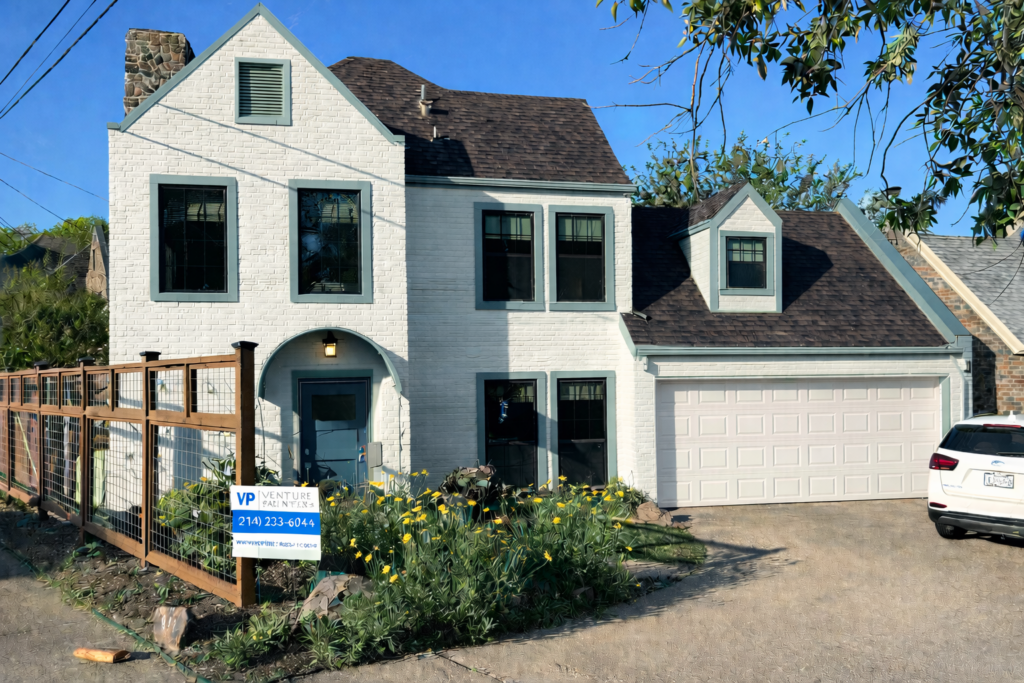
If a previous coating went on in marginal conditions, the first step is a clear eyed assessment rather than an immediate repaint. Walk the house on a bright day and look specifically at north facing walls, shaded areas, horizontal surfaces, and every joint where two materials meet. Test adhesion by pressing tape firmly onto a suspect area and pulling it off quickly, since a sound film stays put and a failing one lifts. Note where the problems cluster, because a pattern concentrated on the cold side of the house confirms a temperature related failure. Documenting the extent gives you real information before you spend anything.
Partial repairs are often the right call when the failure is localized and the rest of the film is sound. Scraping, feathering, spot priming, and recoating the affected elevations can restore the house without the cost of a full exterior repaint. The critical detail is using a primer that bonds well to both the bare substrate and the existing coating, and doing that work in proper conditions this time. Skipping the primer step on a repair almost guarantees the same failure returns at the same spot. We are glad to look at what you have and tell you plainly if a repair will hold or if a full repaint is the better investment.
Timing the corrective work matters as much as the original job did. Spring in North Texas usually opens a reliable window from March through early June, with warm days, moderate humidity, and long hours of usable surface temperature. Booking that work in advance means you get a good slot instead of waiting through the busiest stretch of the year. In the meantime, keeping gutters clear, trimming vegetation off the siding, and cleaning surfactant streaks promptly all slow the progression of damage. Small maintenance steps buy you time and keep a repair from turning into a replacement.
Why Choose Venture Painting For Exterior Painting Before The Season Ends
Venture Painting is based in Plano and works throughout the surrounding high value communities, including Allen, Richardson, Murphy, Sachse, Parker, Addison, and Dallas. Detailed prep work is where our jobs are won, since no coating outperforms the surface underneath it. Our crews arrive clean, organized, and respectful of your property, and we treat your landscaping and driveway with the same care we give the siding. We provide free estimates with clear, honest pricing, so you know the scope and the cost before any work begins. Nothing gets added to your invoice that you did not approve in advance.
Ethos drives how we handle seasonal work in particular. When the calendar and the forecast say a project should wait, we tell you that directly, even when it means moving revenue into next year. That advice costs us a booking now and earns us a customer who calls back and refers neighbors, which is the trade we are happy to make every time. We would rather explain why we are waiting than explain why your paint is peeling. Straight answers about timing are part of what you are paying for.
We specialize in both interior and exterior painting, which means we can keep your projects moving through every month of the year rather than disappearing when the weather turns. Cabinet refinishing, drywall repair, fence staining, and commercial work all fall within what our team handles regularly. If you have warm weekends left and want an honest read on what is still possible this season, we will come look at your home and give you a real answer. Reach out to Venture Painting at (214) 233-6044 or email zeb@venturepaintingdfw.com to get your free estimate on the calendar. Want to see the full scope of what we handle outside? Click here for our exterior painting service.